Friday arrived, and as predicted, after two long days on my feet, getting up silly early, however much I wanted to get to Rialto Market early doors, wasn’t going to happen.
Today was a big day: not only were we moving house – so carrying all our belongings with us all day – but we were also headed to ‘central’ Venice.
Venice only takes about an hour to walk East to West and half an hour North to South (not including the ferry and the crossing of Giudecca – the most southerly island of ‘mainland’ Venice).
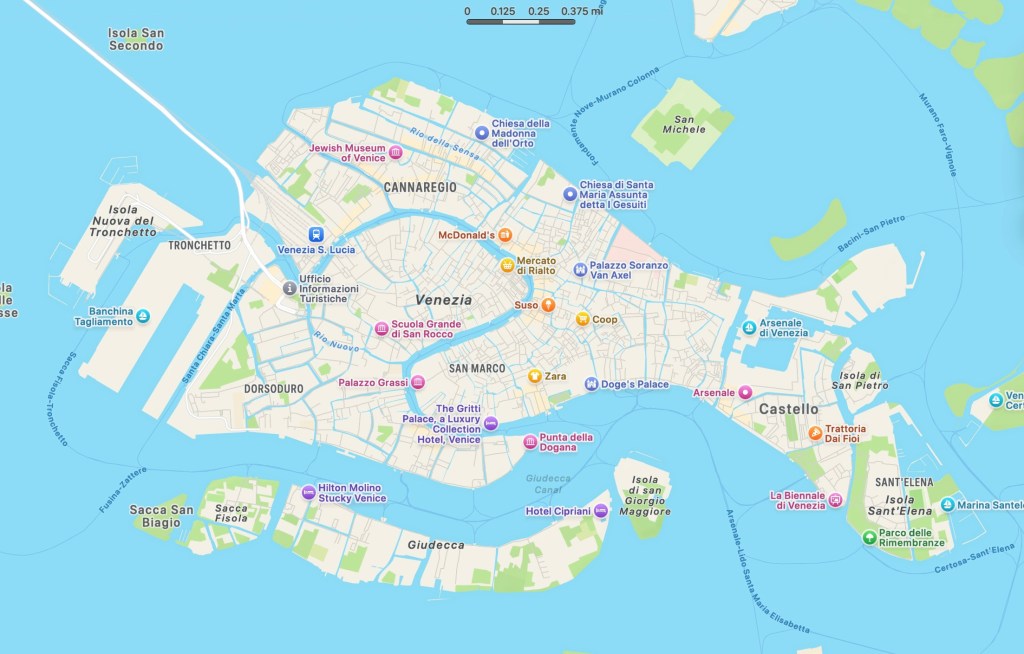
The Arsenale and Biennale Giardini venues are both in the east, and we stayed here too (we had even got the Alilaguna Ferry to Arsenale to avoid the mad crowds of the west) – so although it is by no means quiet, it is mostly art tourists, not your regular Venice-sites tourists. It is noticeably more pleasant. Not personal, I’m sure the other tourists are lovely too!
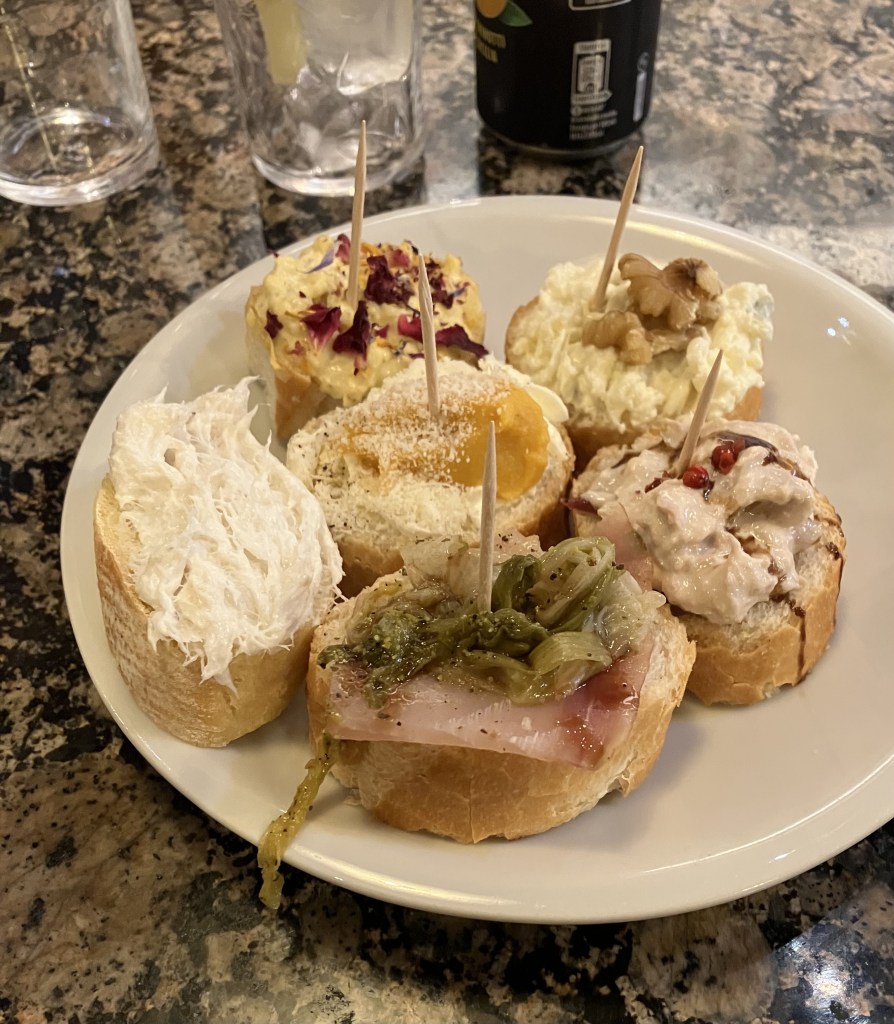
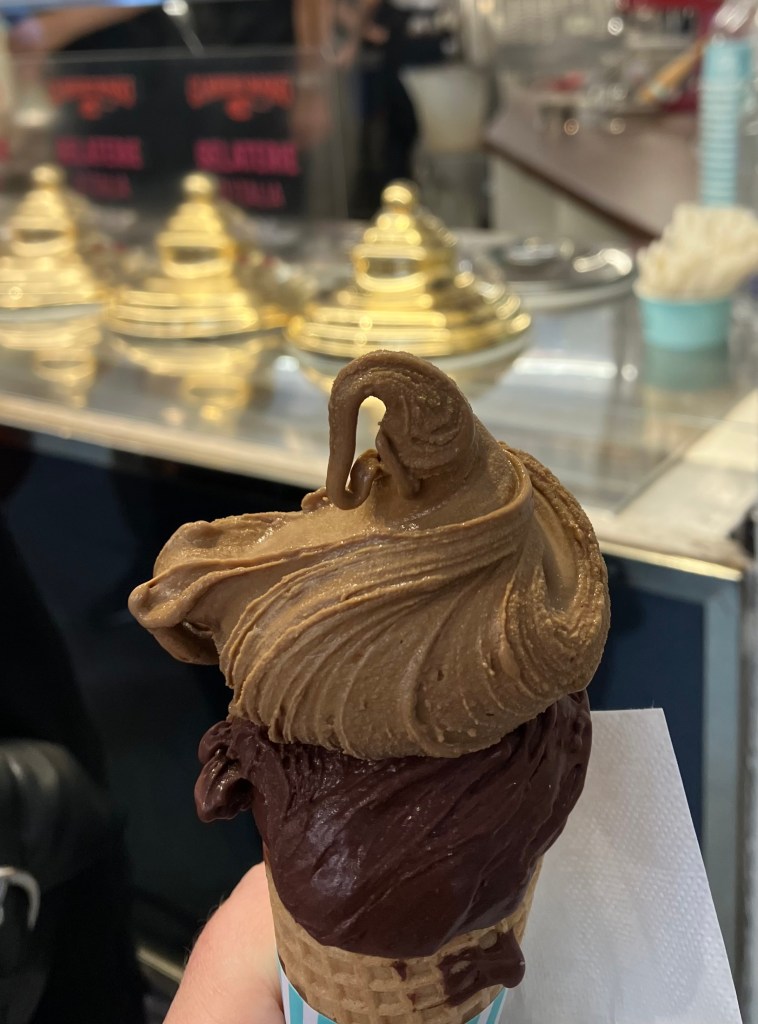
But Friday was the day. For the Rialto Market, for pigment shops, for Biennale venues – the 46 ‘off-site’. For my favourite Cicchetti Bar (Cicchetti – a traditional Venetian eating experience where you choose small snacks or finger food from the counter and eat them standing up). For the best Gelato in Venice, with, as it turned out, the rudest service possible – who knew it was ‘un disastro!’ to want to pay by card – he could have asked us if we had cash before throwing his hands up in indignant horror?!
We were going to visit the Peggy Guggenheim and finally take the vaporetto up the Grand Canal – no amount of doing it before removes the (expectant) thrill of doing it again.
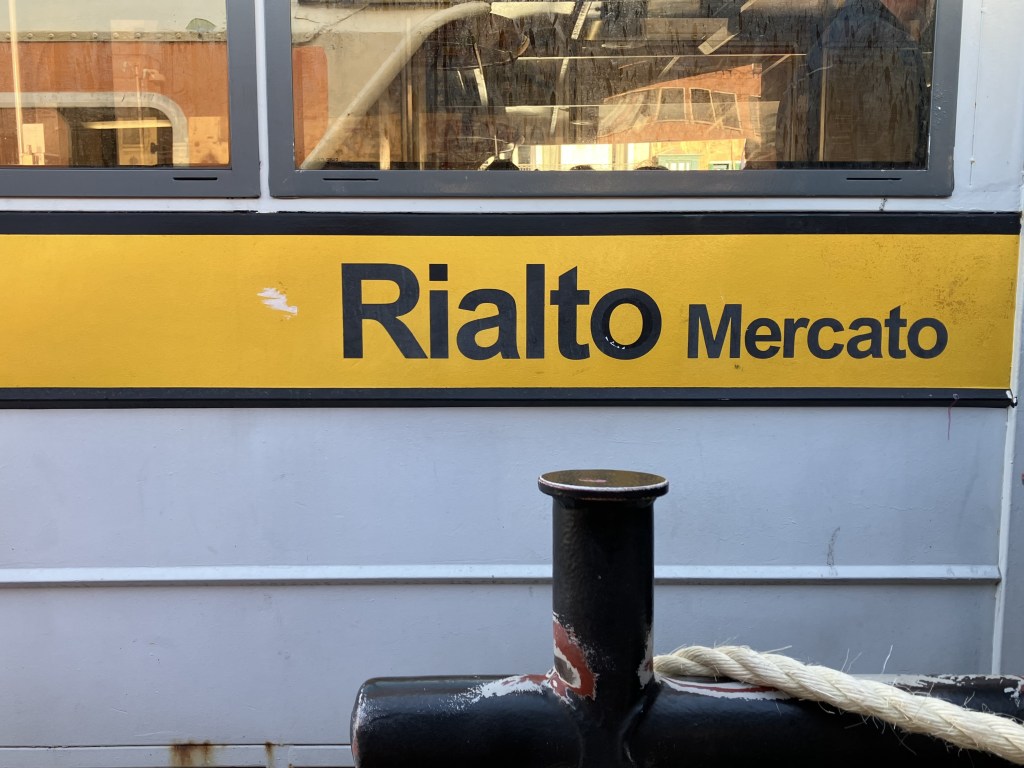
We did actually manage to leave pretty early. A minor miracle for Cleo and me.
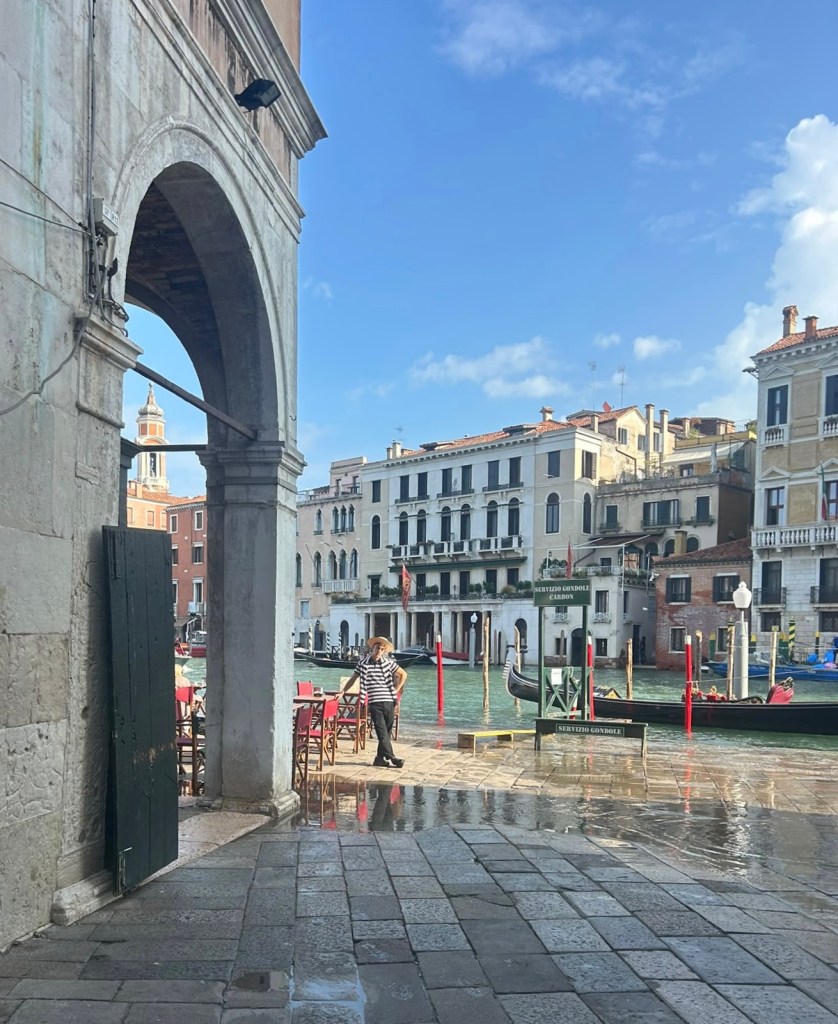
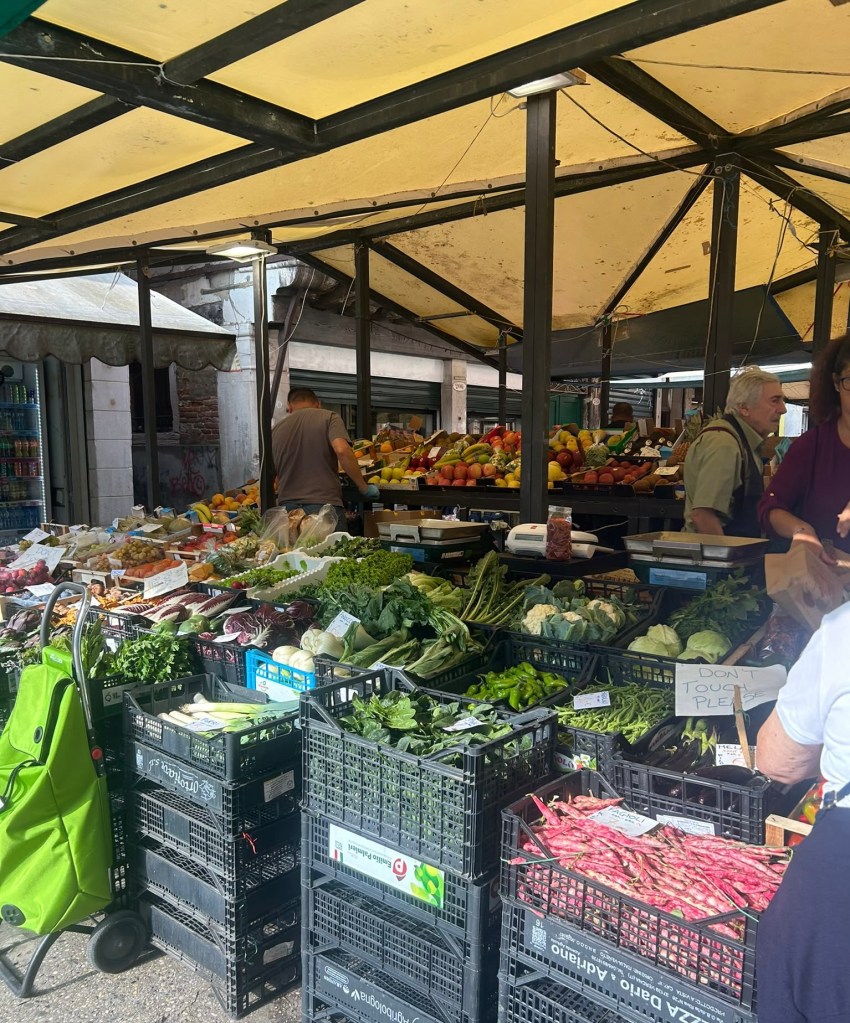
Rialto Market. One day I will stay in an apartment with a kitchen near this market. I may need to win the lottery first. Bucket list.
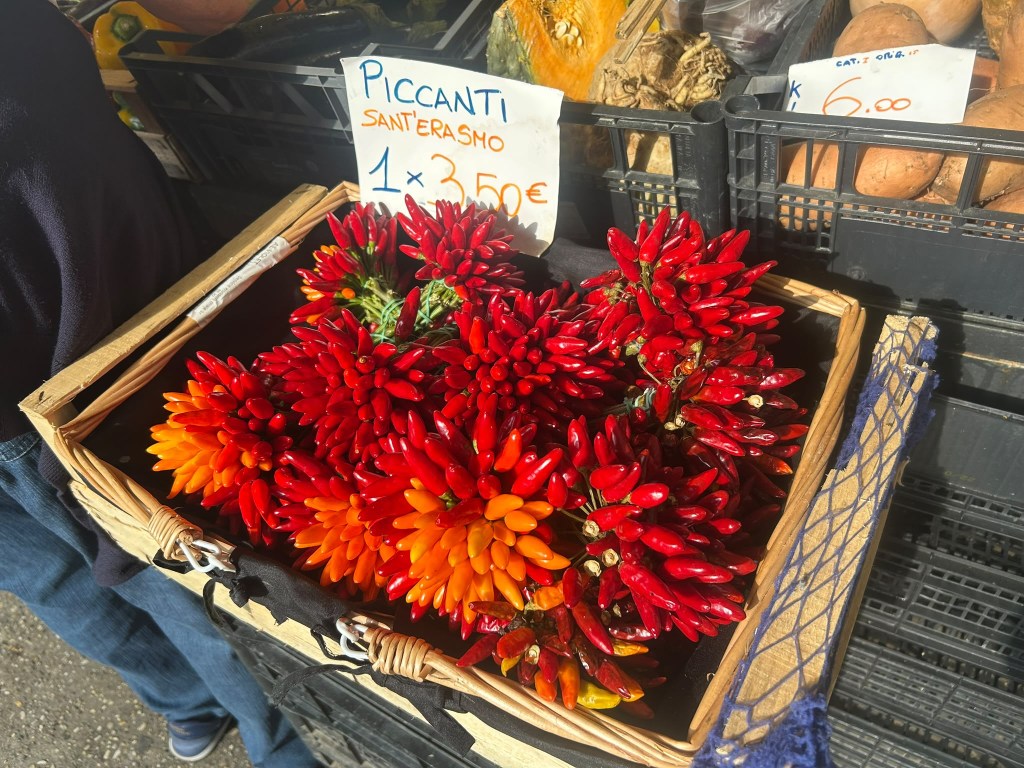
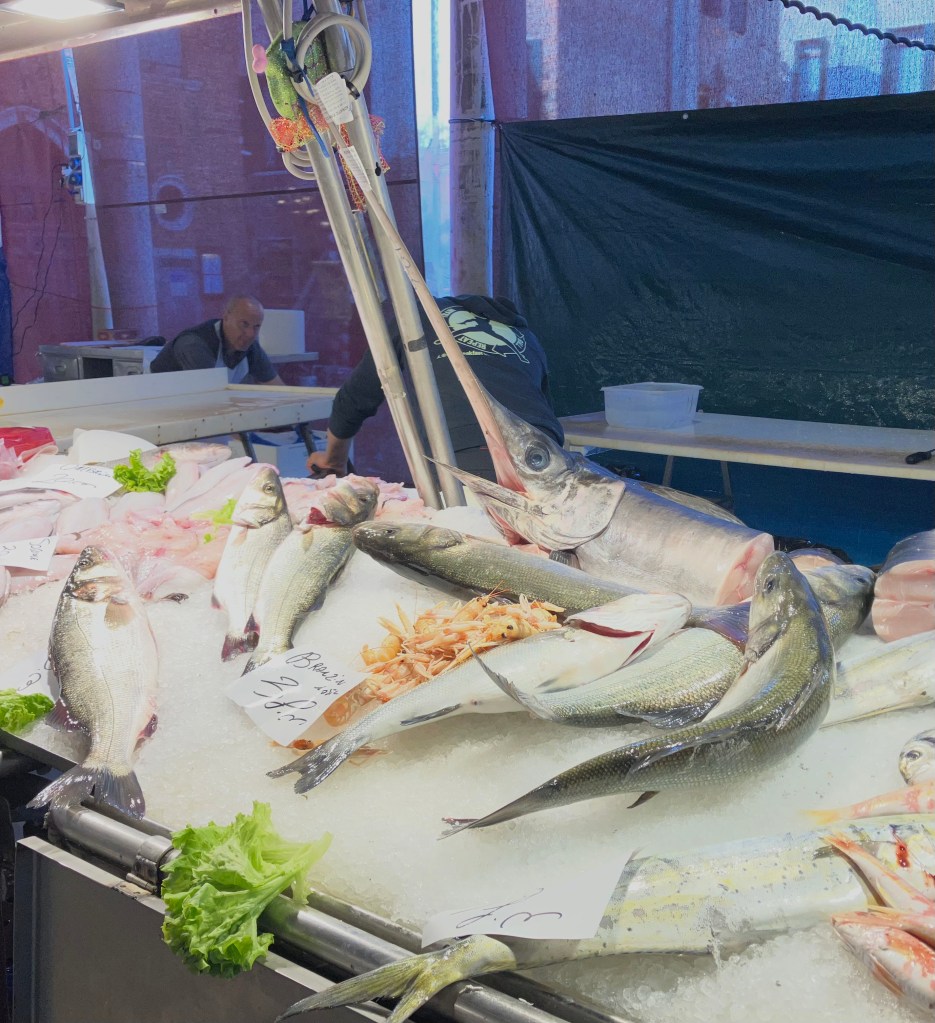
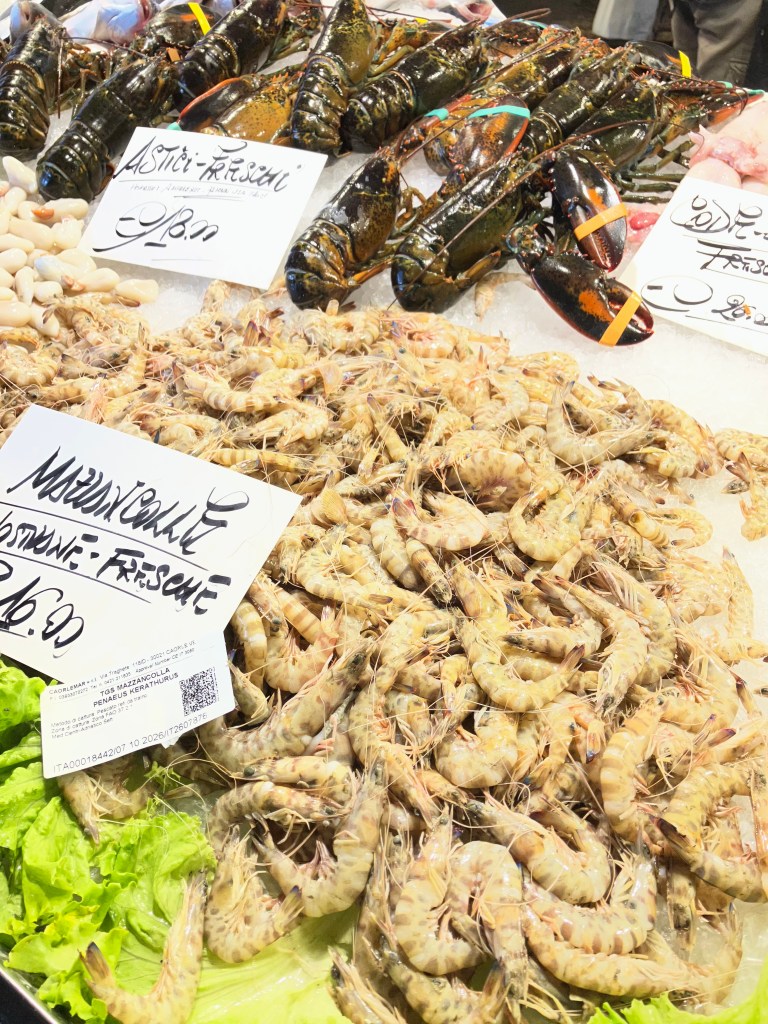
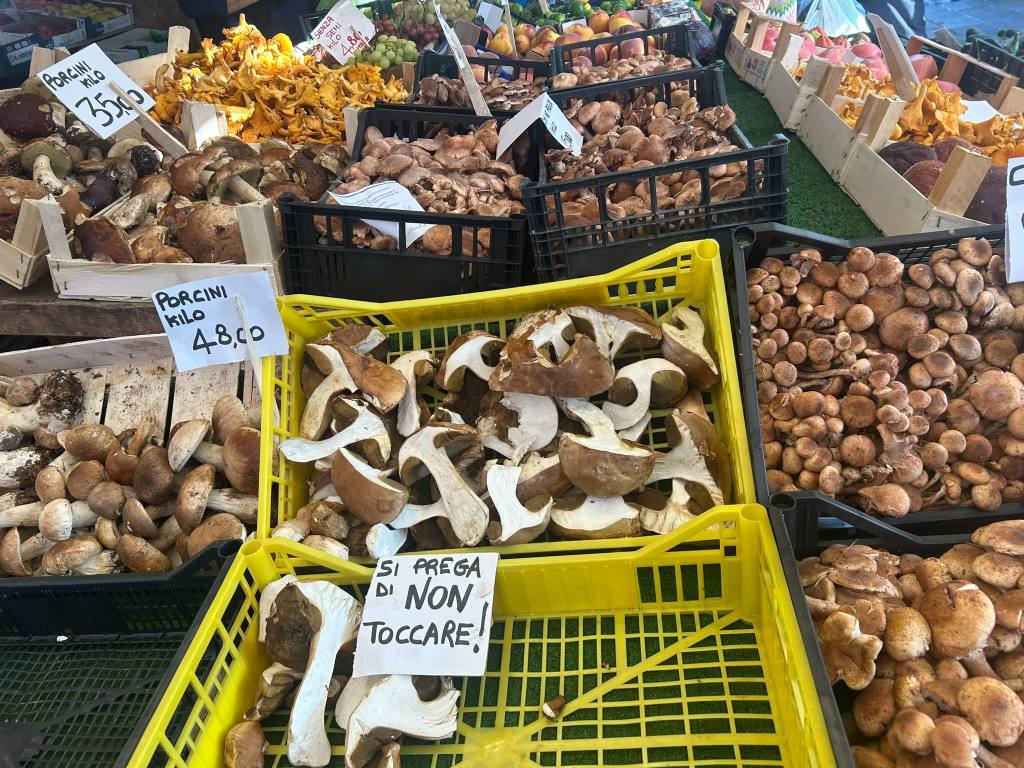
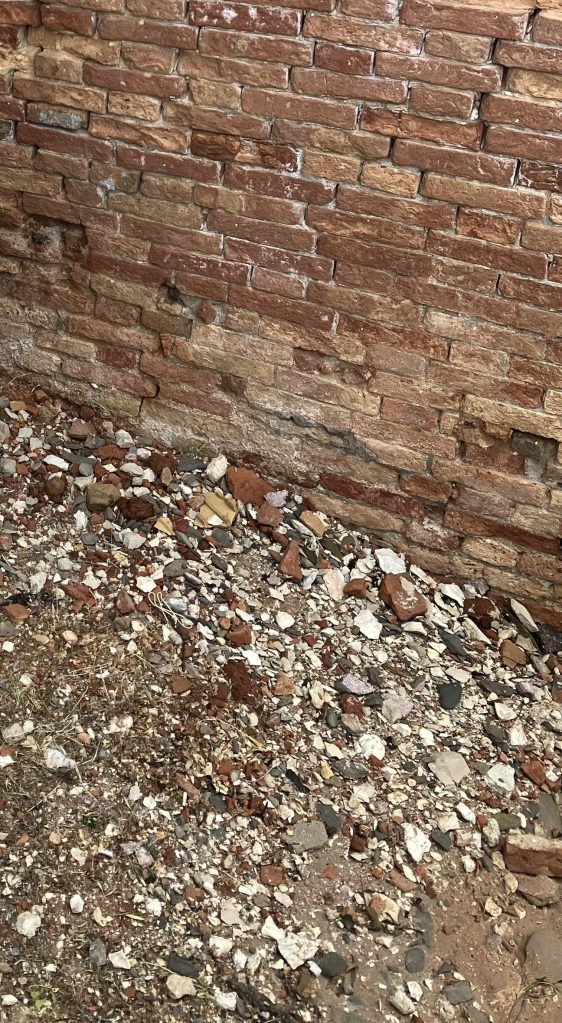
Pigment shops. Disappointing, but the blow was softened by, after days of Cleo poking at walls dreaming of finding suitably loose and non-functioning bricks for pigment making (Venetian Walls sounded a good colour), we found an unused and secluded corner beside a back street canal, where the many types of brick – plus an old rusty nail, rust being an important part of pigment making – were serving no purpose at all. I took a hideous (her words!) photo of Cleo which didn’t include the adjacent canal, which would’ve been a nice touch. So I have duly cut her out of this photo, but added it anyway – I can’t tell whether it’s for my own amusement, hers, or to show you how many colours there were and let you imagine the number of different pigments that can be made from this little patch. Take from it what you want, or just read on…
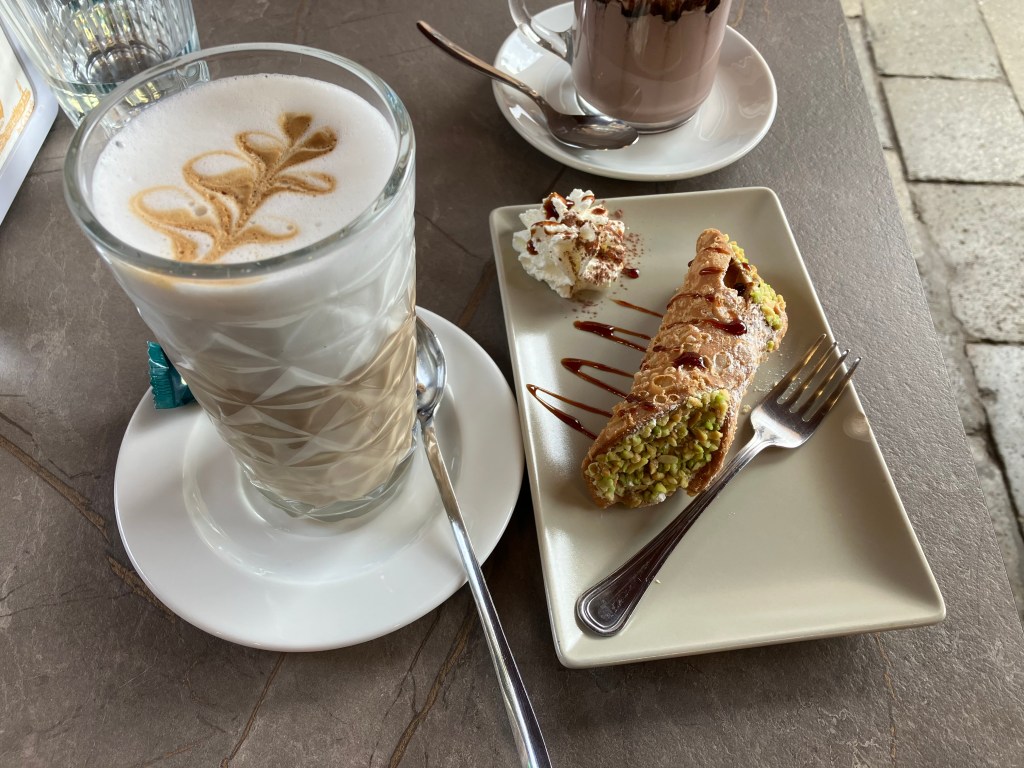
I feel the urge to wax on about food here, but how about I just share the photos and spare the waffle; there’s still more art to come.
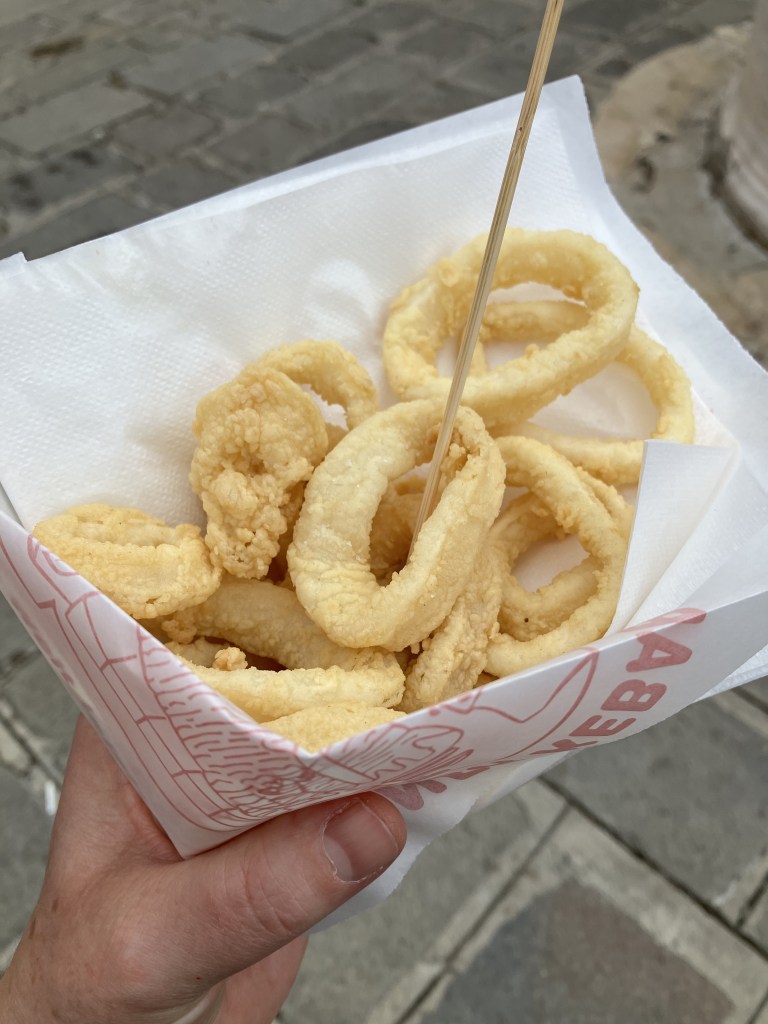
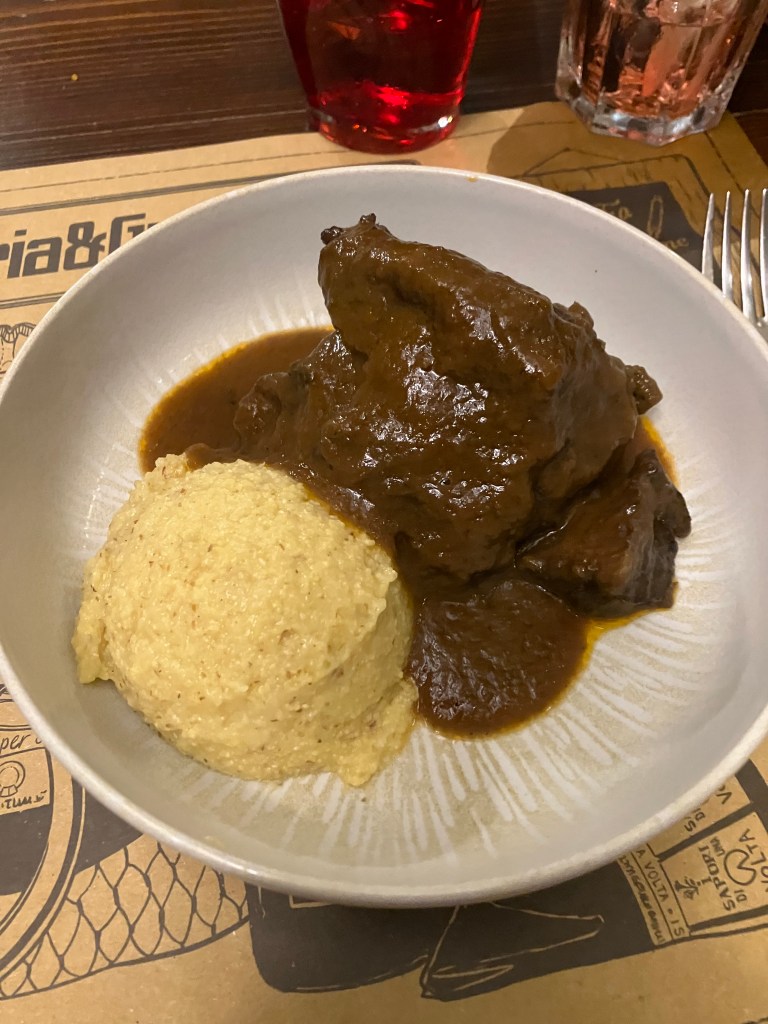
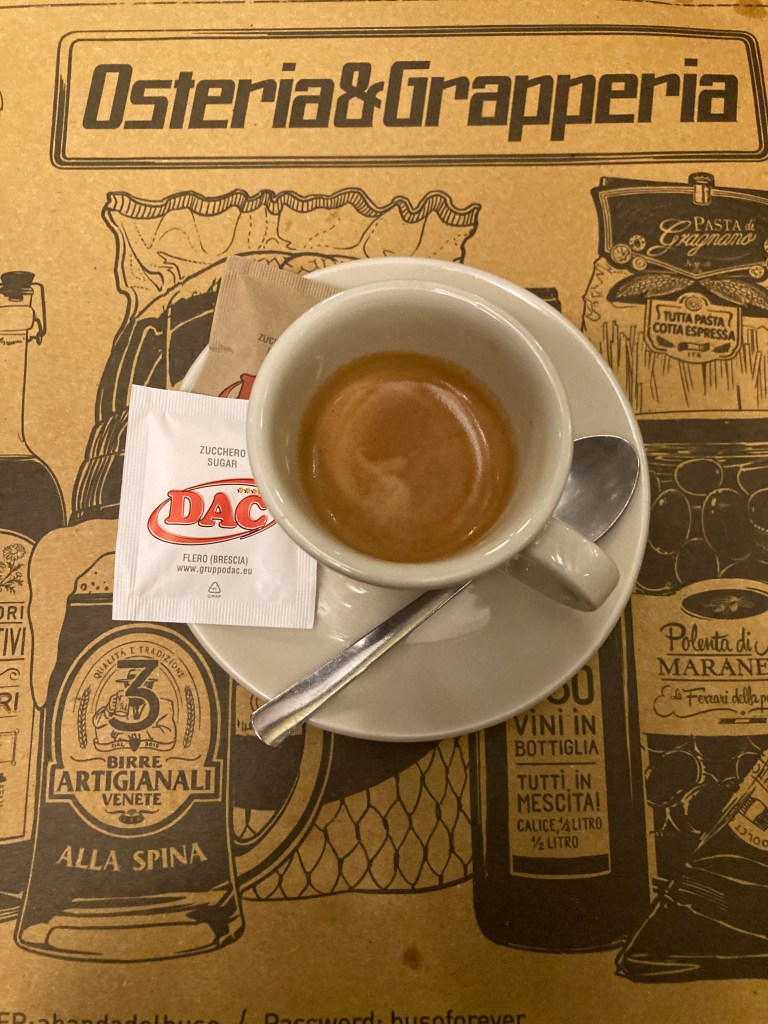
There were a few biennale venues we visited along the way, but none that blew me away – at least, not entirely (as I think they) intended, but that’s where the joy can hide.
The Taiwan gallery had been recommended, situated in the Palazzo delle Prigioni, right on the water. A beautiful building. Some of the photos I’ve seen make the exhibition room look so impressive – giant stone-like dismembered hands, feet, head – but in reality I didn’t feel the impact of them so close up. I was watching the film. But it was a little lost on me sadly. Reading about it now, I think I may have missed out. It is not so unusual for me to not have the capacity to catch the meaning of things if they are in any way hidden. I am not stupid, just sometimes a little slower to process things; I like to think it’s a super-power – one I’m just not entirely clear on yet?
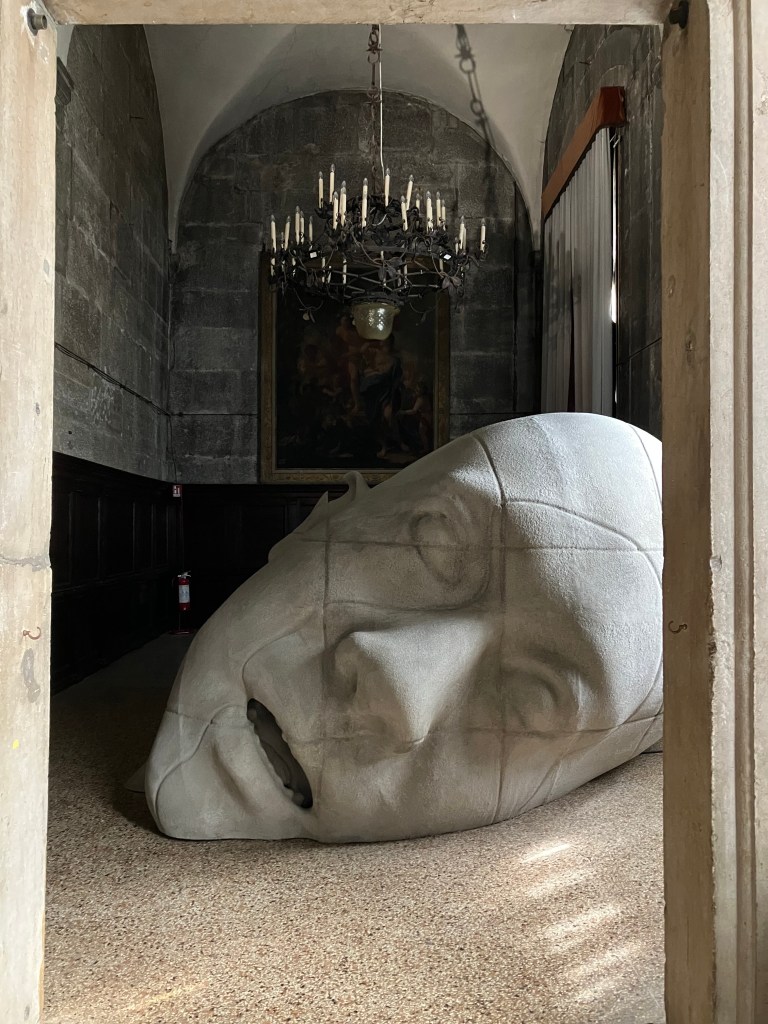
But, as I then stood up to leave, I saw the head.
In a doorway I hadn’t seen.
Squeezed into a tiny room.
Religious painting on the wall.
Proper old black metal candelabra overhead.
And it was one of those oof! moments.
Something a bit mind-blowing. Beautiful. Out of place and yet as if it has been there forever.
Did I mention before how much I love these unexpected moments?
However, the main event, aside from the cicchetti, was always going to be the Guggenheim for me.
It seems, now, to stand as a marker in my life.
Of learning. Of development. Of change. Of absolute peace.
But unexpectedly, on this visit I also had some niggling uncomfortable thoughts. Ones about feminism and equality.
Maybe I’ve been slow to have them here (to be fair, it’s not like I’m a weekly visitor), but I couldn’t stop thinking about how much of Peggy Guggenheim’s collection is by male artists. And even, where there is art by women here, how much of it includes naked women.
These are obviously not new observations. Clearly, nor are they a surprise. And in the non-permanent exhibition there was more art by women, but it felt so performative. So token-gesture. They even talked about ‘arts and crafts’, as if that’s what women were doing around the time Peggy Guggenheim (1898 – 1979) was building her collection. I know there was an ‘arts and crafts’ movement around this era, but this did not assuage these feelings).
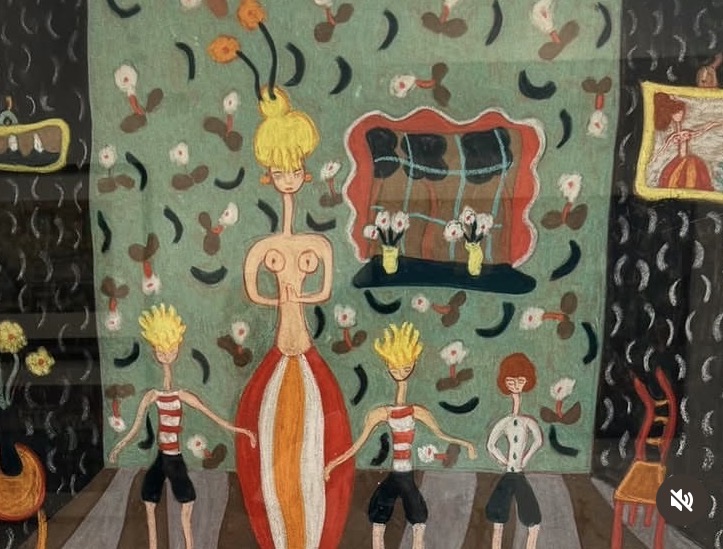
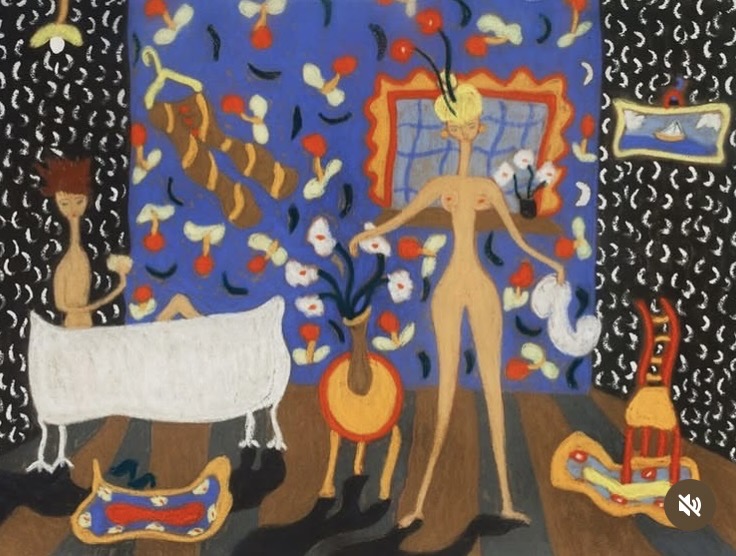
It was the small room of art made by Peggy Guggenheim’s daughter, Pegeen Vail Guggenheim, that made me most uncomfortable, though. Imagining the world that Pegeen must have grown up in, while no doubt her mother was a strong, powerful character, how dominated it must have been by male power and the male gaze.
Peggen is described as a self-taught painter who combined surrealism and naïve art, famous for her doll-like, melancholic figures and family scenes.
In the vast majority of her art, the female figures are naked waist up.
Maybe it was the element of naivety in the art that misaligned for me in the insistent nudity – but this was work done in her adult years (I’m relieved to discover that the only work I can see of hers that survives from her childhood, the figures are at least fully clothed).
Having now done some research, my instincts were not necessarily wrong.
‘Peggy’s outsized personality and excesses are well known, as are her multiple liaisons through the art world; it’s scandalous and titillating.’ And Pegeen, suffered from lifelong depression, severe alcohol and prescription drug addiction, and a history of multiple suicide attempts – starting in childhood and ending at age 41, the last of which was sadly terminal. Of course these are two opinions (judgements) I found on the internet – I’m not suggesting anything was clean cut or obvious, just that my suspicions that it may not have been an easy environment to grow up in, were maybe not entirely wrong.
My relatively quick viewing, made me uncomfortable – and not the sort of intriguing discomfort I like to feel in art. It was not something I wanted to spend time with. My mistake, maybe, as here I am with the strong urge to return and look for that deep sadness and depression that was behind these ‘joyful, celebratory and colourful’ scenes.
This all leaves me in a place of quandary.
The balcony of the Guggenheim, looking over the Grand Canal, is one of my favourite places on earth – joint with a stile just outside Padstow in Cornwall.
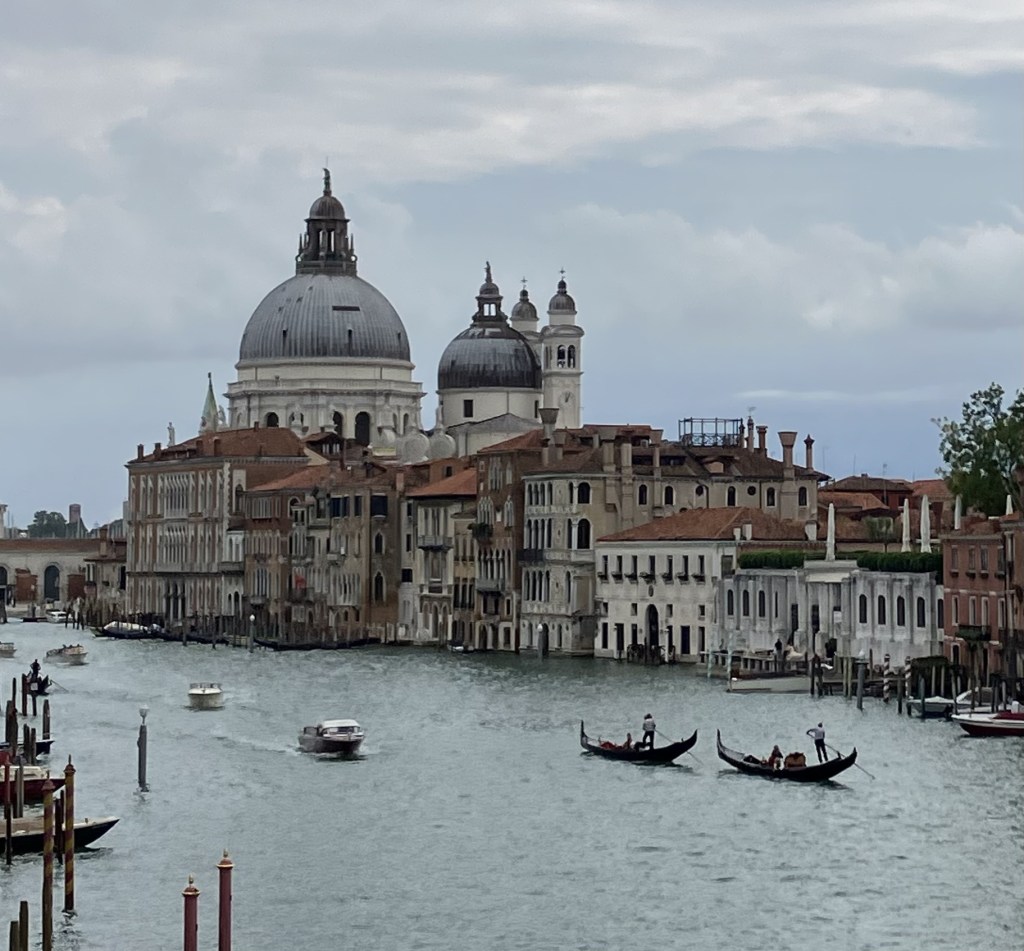
Being on this balcony signifies for me, wholeness, peace and acceptance of who I am. That it is more than ok to be me. And breathe…
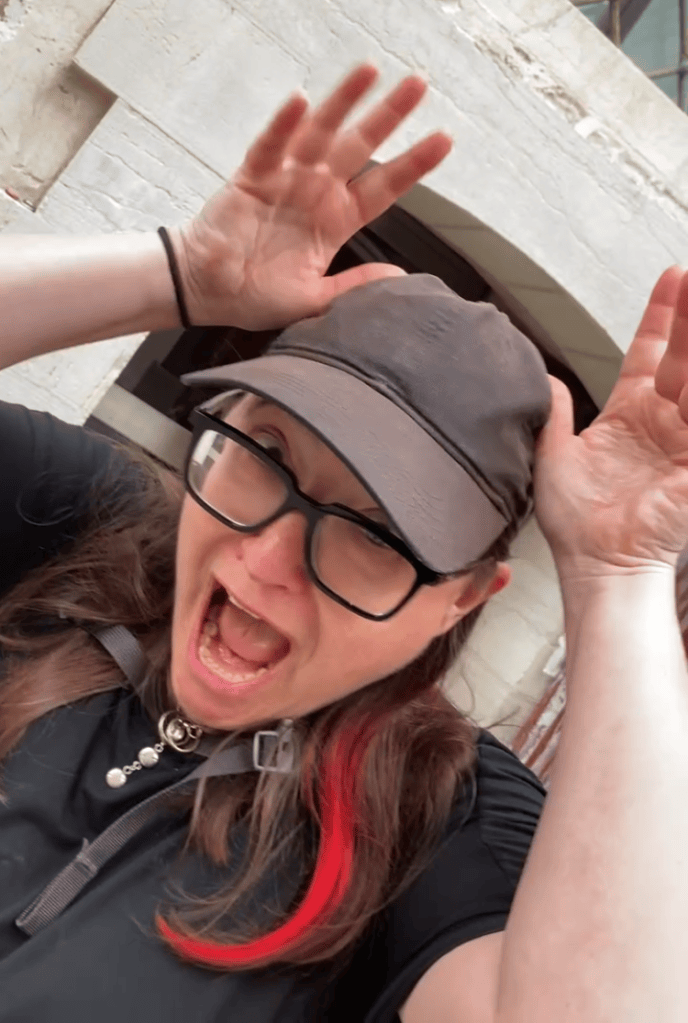
Inside the gallery, I was beyond delighted to find my favourite piece of art ever. I had tried not to hope it would be on display too much, to avoid disappointment.
But there it was.
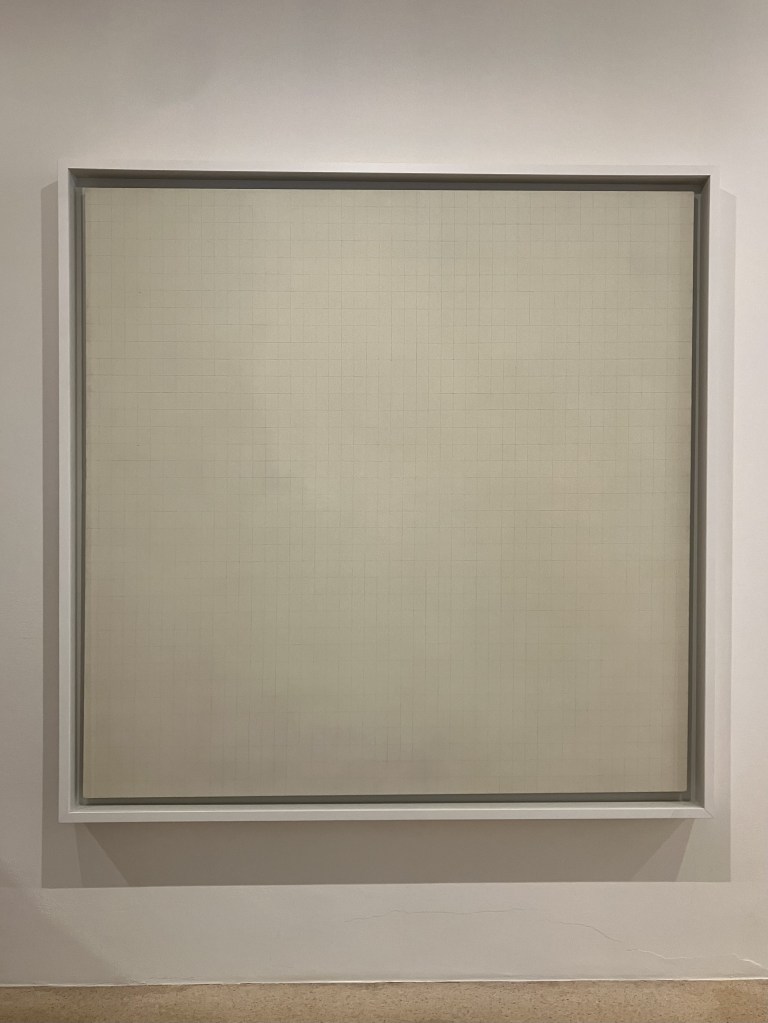
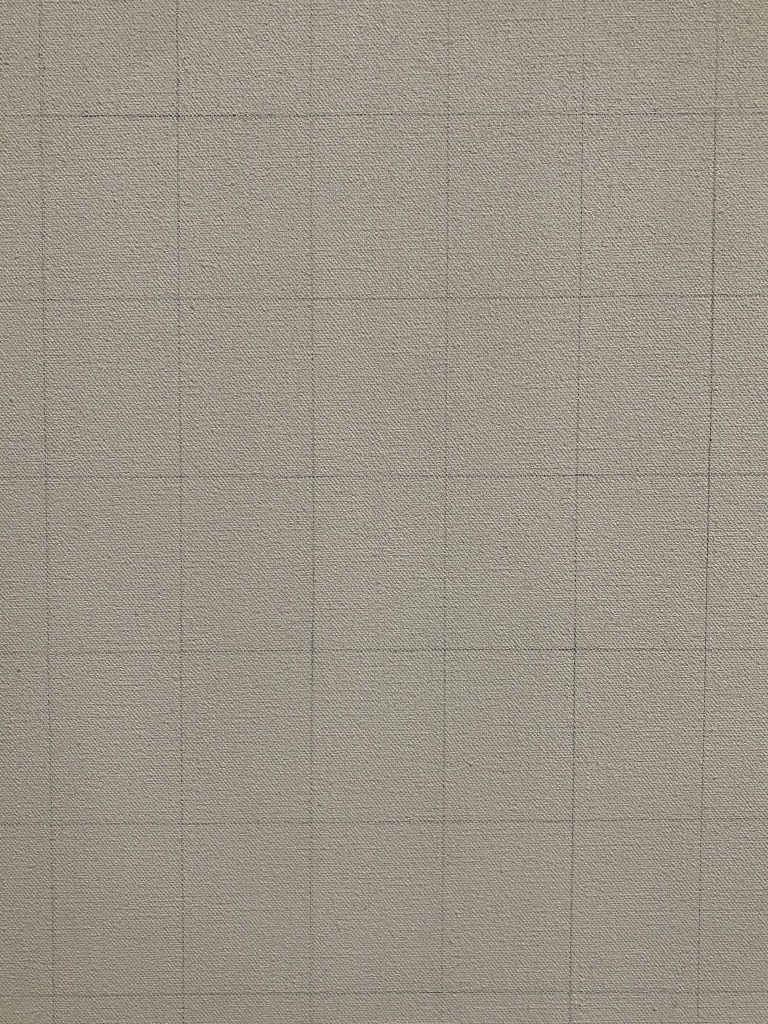
Interestingly – to me at least – this also represents similar feelings of learning, understanding and a feeling of pride in who I am – something I am rarely in touch with.
If you are familiar with my blog you may remember that I have written about this work before. In 2017 I wrote this about it:
‘Agnes Martin (1912-2004) has several works in the collection; the one that caught my eye is entitled Rose (1965). Agnes Martin described herself as an Abstract Expressionist, and the Guggenheim says of her, ‘Rather than representing formal stringency, Martin’s reductive visual language conveys her emotional response to nature and transmits the experience of beauty and lightness’, and of her work, ‘At a distance, the lines of Rose fade, resulting in a sense of an infinite, supernal space’.
…In my more relaxed, sitting-in-the-sunshine state, I feel I can appreciate this more. In my tired, verging-on-arted-out state, this was a challenge! I leave you to form your own opinions.’
In 2021 I wrote this about it:
‘[in 2017] I was at the Venice Biennale and had crammed in as much art as was humanly possible in just three days. I ended the trip with a visit to the Guggenheim – as part of a challenge to myself, all three Guggenheim’s, Venice, Bilbao and New York, in four months.
Oh for those days of travelling again…
My Endometriosis was chronic, and I was knackered, but there was one piece of work which particularly mystified me.
I was really drawn to this [Agnes Martin – Rose, 1965] piece.
Intrigued. And yet, had no idea how this was art. How this was a Rose. The lines so feint to be barely visible.
But the very fact that I remembered the name of both the painting and the artist, especially on just a single encounter, is in itself a significant sign of how profound an effect the work had on me. Fascinated, curious, but not moved. Maybe that’s enough? It certainly placed it in a memory bank, and to be honest, such banks are not in abundance in my brain!’
In 2026?
Well, I was just delighted to see it!
My feelings were warm, calm, peaceful, of understanding, of a learning process, of achievement and pure, simple happiness.
Let me share again… Agnes Martin – Rose, 1965
So where does that leave me with my confusion and my discomfort of the origins of this museum?
It’s certainly something I need to digest.
Can I put aside my deep dislike and need to object, put up boundaries, to the deep misogyny of the art world in the past, or can I acknowledge it and still visit somewhere that holds such an important place in my heart?
Can I accept that my need for this ‘marker’ in my life of the progress I have made, into accepting and liking me, has maybe come full circle, or will I be able to return to this haven of calm and see if it marks further developments in my life in the same way?
Who knows?
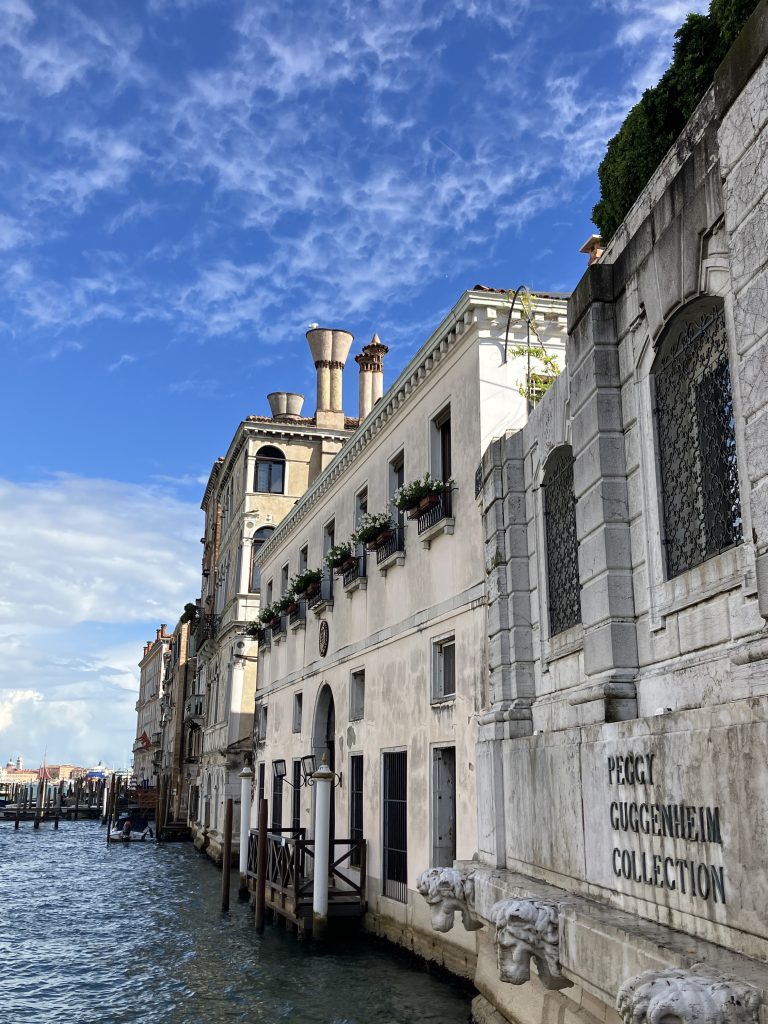
And this somewhat brought us to the end of our art journey.
Not the end of the trip, as we went on to Padua for a day of well-needed recovery.
But first, the trip down the Grand Canal. Hmm…
It was a bit like getting on a rush hour tube train. One of my least favourite things in the world!
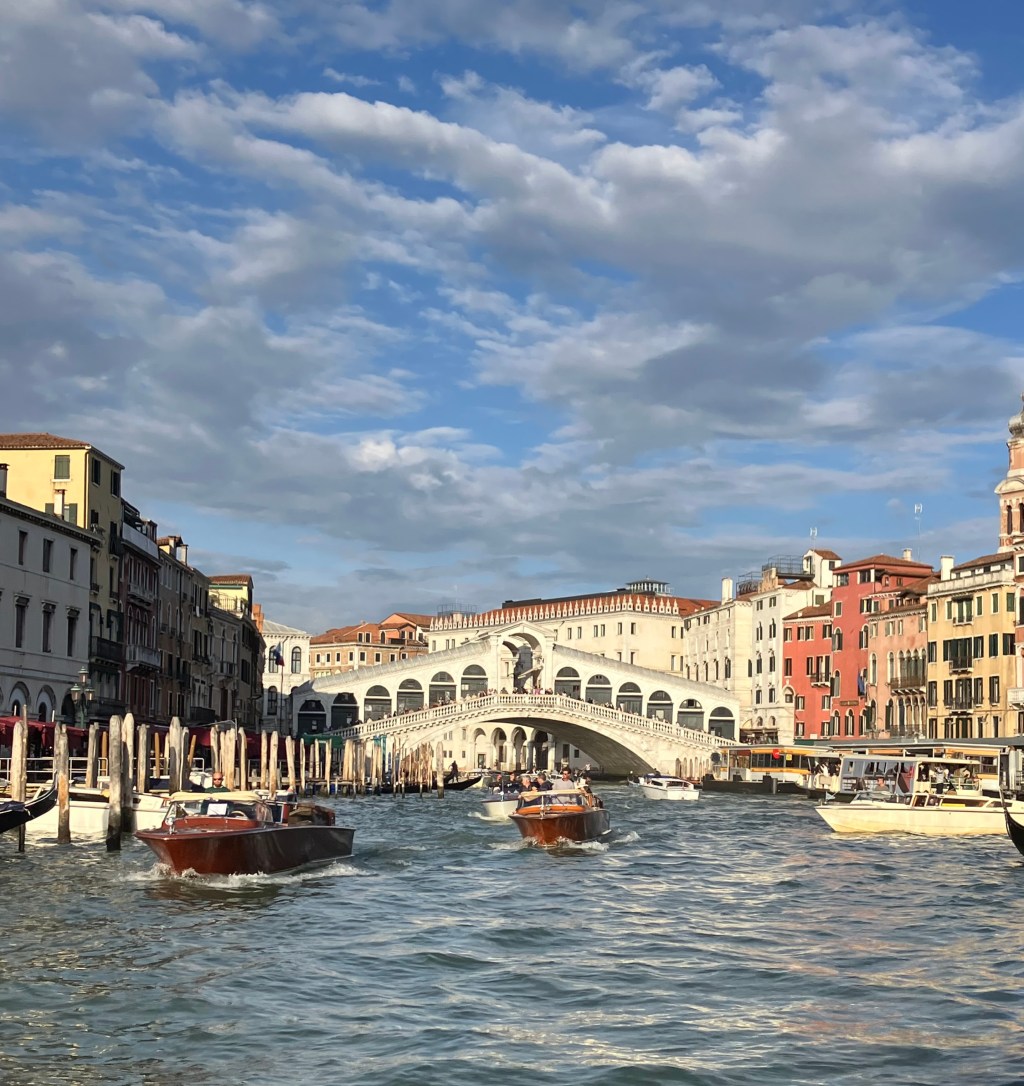
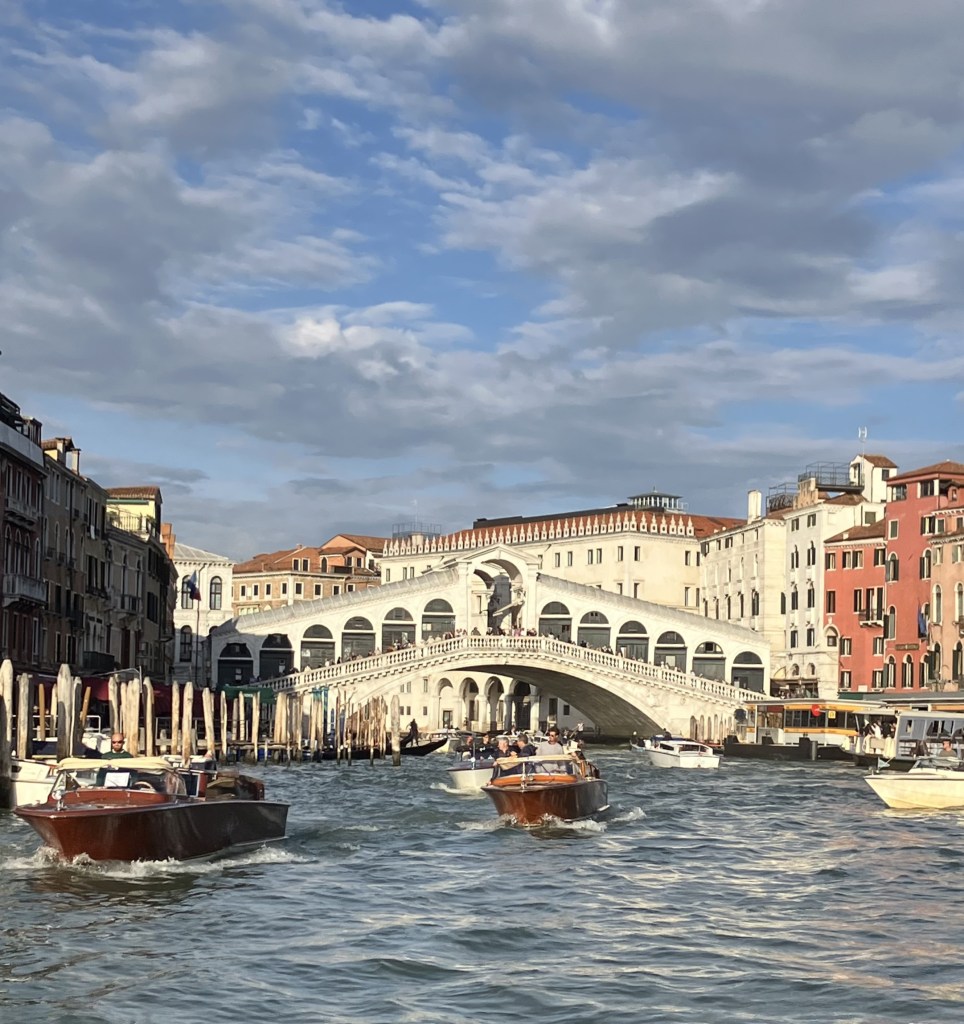
Nose in others armpits, pushed, tutted at, continually in someone’s way. But gradually as we made it upsteam, the number of people diminished; we secured a good spot together, and then we got to see the Rialto Bridge from the water.
Surely it’s one of the bucket list views, however many times one sees it?
So, till next time…
Oh, just one more thing. How many scoops of Gelato is too many in a 3 day trip? Asking for a friend…


Leave a Reply