Thursday morning, and we both struggled to wake up. Unsurprising under the circumstances. Also unsurprising if you know us.
This is actually only the fourth time we have ever met… yes, really!
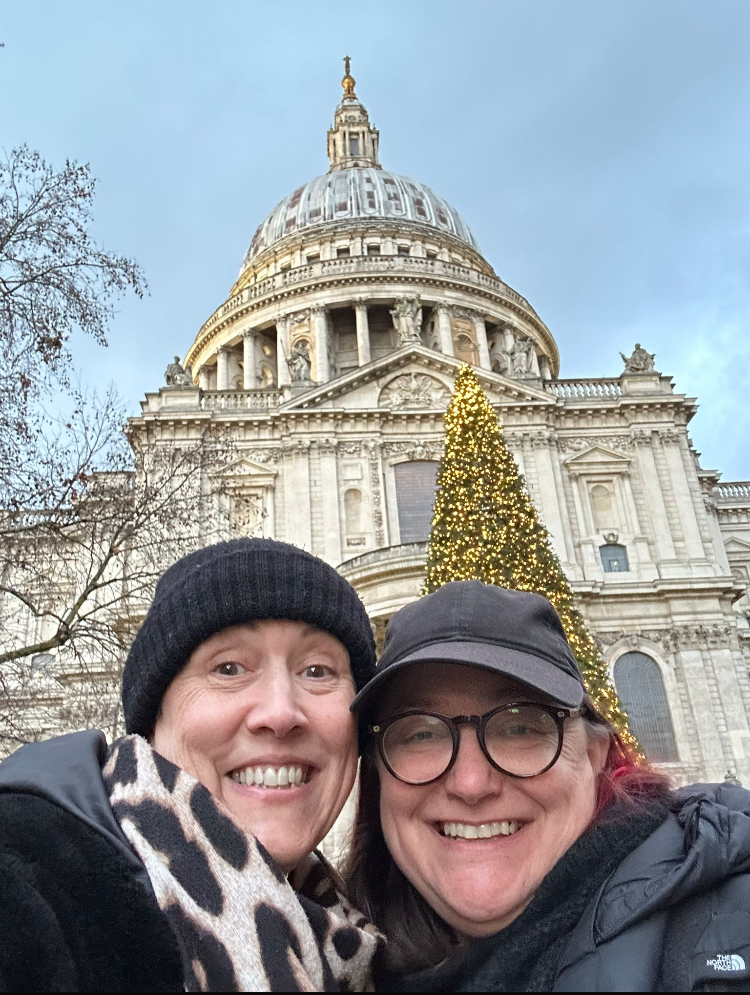
Cleo and my friendship is one of the beautiful things that came out of lockdown.
We both attended online peer support meetings with M/Others Who Make – ‘an international initiative connecting and supporting women and non-binary people to thrive in their creative paths, alongside sustaining their caring roles, of self and others’.
We didn’t meet in person until the end of 2024 – a big birthday. Then at the end of 2025 we spent 2 days in London hanging out, enjoying the Christmas lights. 45 minutes outside Exeter station in July, as I passed through on my way home from educational work in Plymouth and now, here we are, in Venice. (Behind the camera…)
We are both terrible at mornings.
However, since the Biennale opened at 10 am, obligation and gentle excitement got us going, and we were soon out and about.
Our first foray was into the Azerbaijan Pavilion. A little ‘house’ opposite the entry to the Arsenale. Artist: Faig Ahmed. Art literally spilling out on to the pavement.
One was asked to remove their shoes before entering. Would you have left yours outside? I felt disappointingly distrustful, but losing my only pair of shoes would’ve been a very bad start to the day!
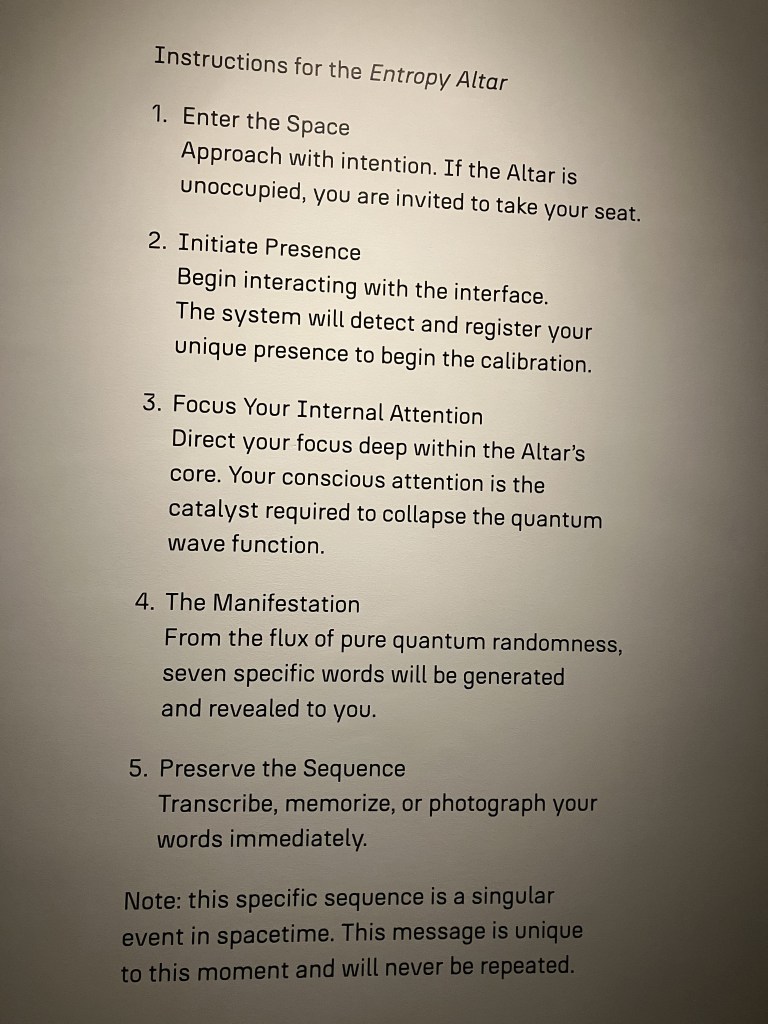
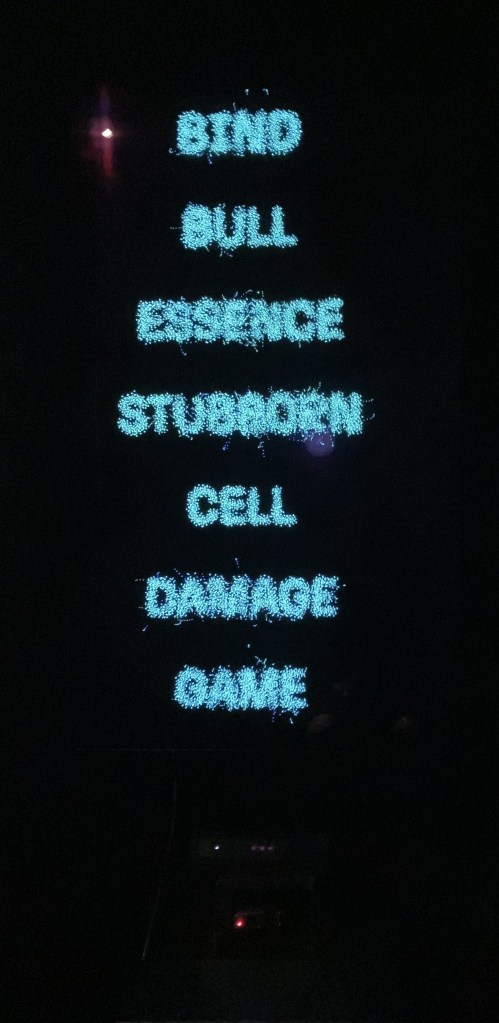
With shoes in hand, this was a fun start however, with a sad lack of photos to show you, a disorientating carpet lay throughout. A sort of drug-induced melting swirl was utterly convincing to the brain that the floor was in fact undulating. It wasn’t. There were other playful aspects, a room where the sound was produced by your movements and Entropy Alter, a ‘generative quantum installation utilising a quantum random number generator to weave alphanumeric poetry and visual patterns in real-time based on visitor entropy and presence’. That’s a mouthful, and in case anyone else also needs a prompt on the word entropy, the Cambridge Dictionary says: 1. the amount of order or lack of order in a system; 2. a measurement of the energy in a system. Maybe I’m taking this too seriously!
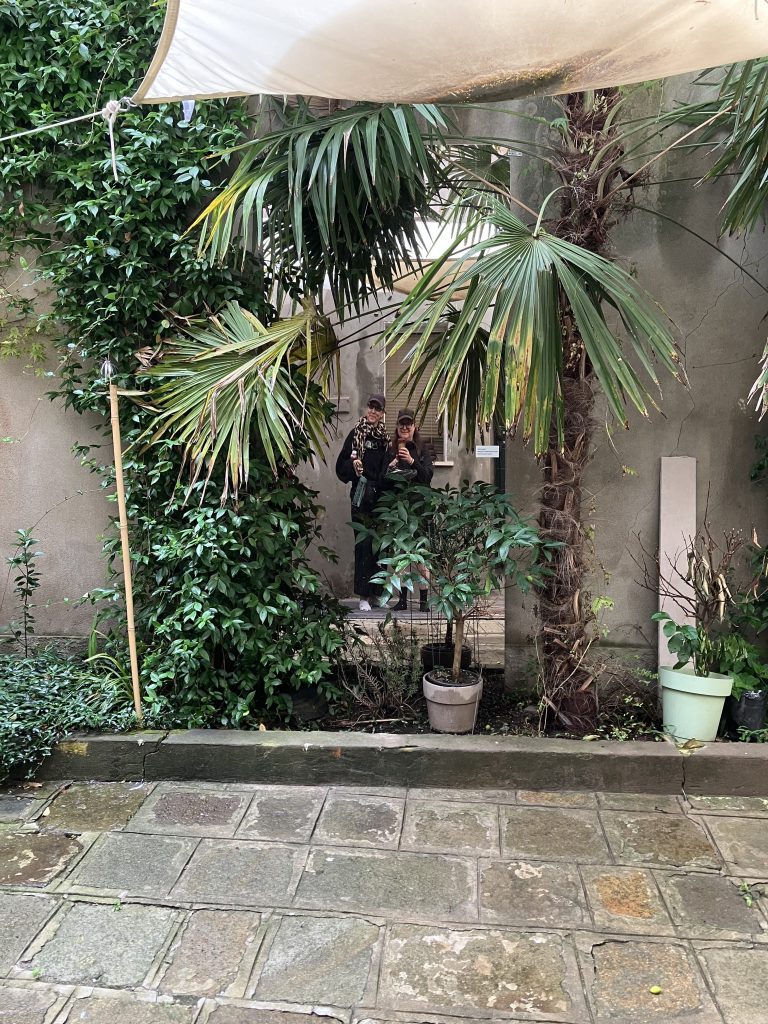
Then we entered the Arsenale International Exhibition proper. It’s a mad long building with gorgeous high wooden ceilings where art from different countries is displayed together. It’s one of the few places this happens in the Biennale.
The building’s dimensions are a huge asset for the number of people, though it always felt like there were a lot. And don’t be fooled by the fact that most of my photos don’t contain people, some of them took a lot of patience!
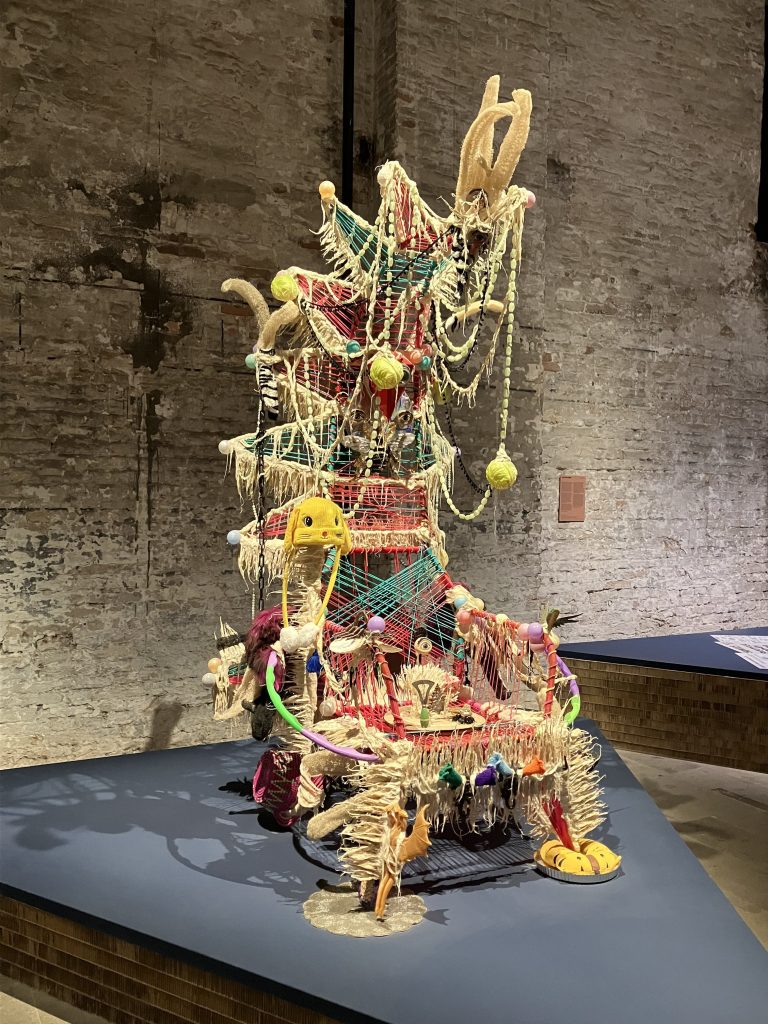
I’m always interested in figures – I guess as an aide to understand better how things ‘work’? Happy to admit here though, I still have no concept of temperature. All I know is that when I was a kid I was a chorister. If the thermometer said it was over 70°F then we didn’t have to put cassocks on for rehearsals. I still judge my clothes and the weather by this – it’s not a great system, to be honest!
But here are some figures about the Venice Biennale that I find quite useful and interesting:
At the last Art Biennale (2024,) there were about 700,000 visitors. It was the second highest attendance in the event’s 129-year history. About 60% of visitors were from countries other than Italy and, 30% of them were under 26 years old. The festival averaged about 3300 visitors a day for 219 days.
I can safely report that, basically, that feels like a lot of people!
But it’s 2026, and here are some highlights to give you a taste:
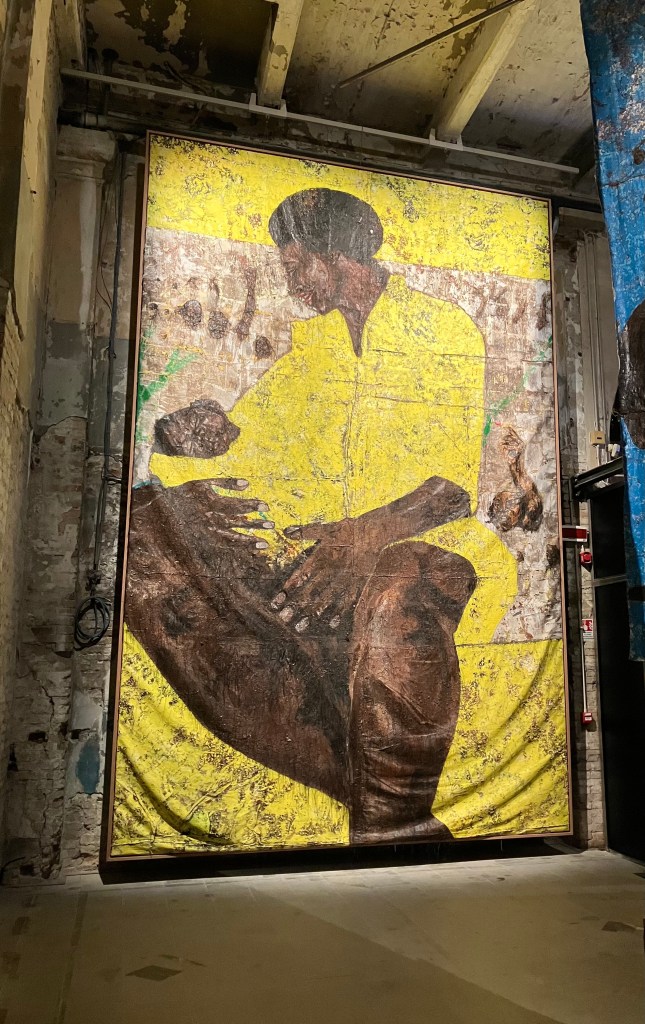
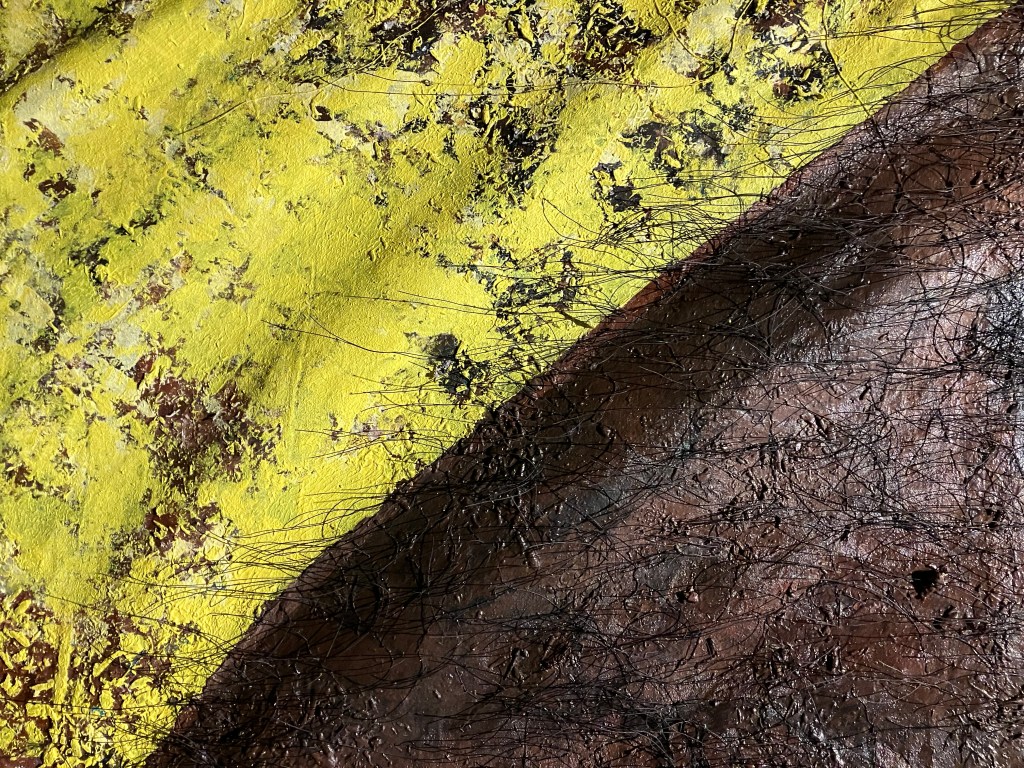
Kaloki Nyamai, Kenya
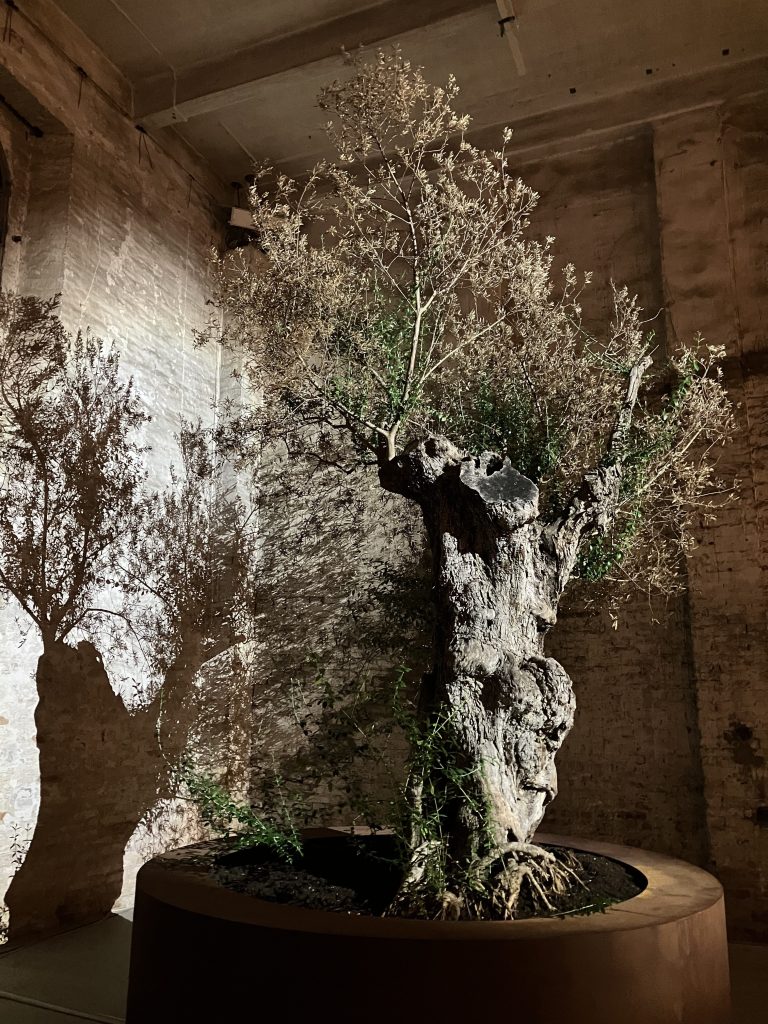
Garden of the Broken Hearted (with music box melody)
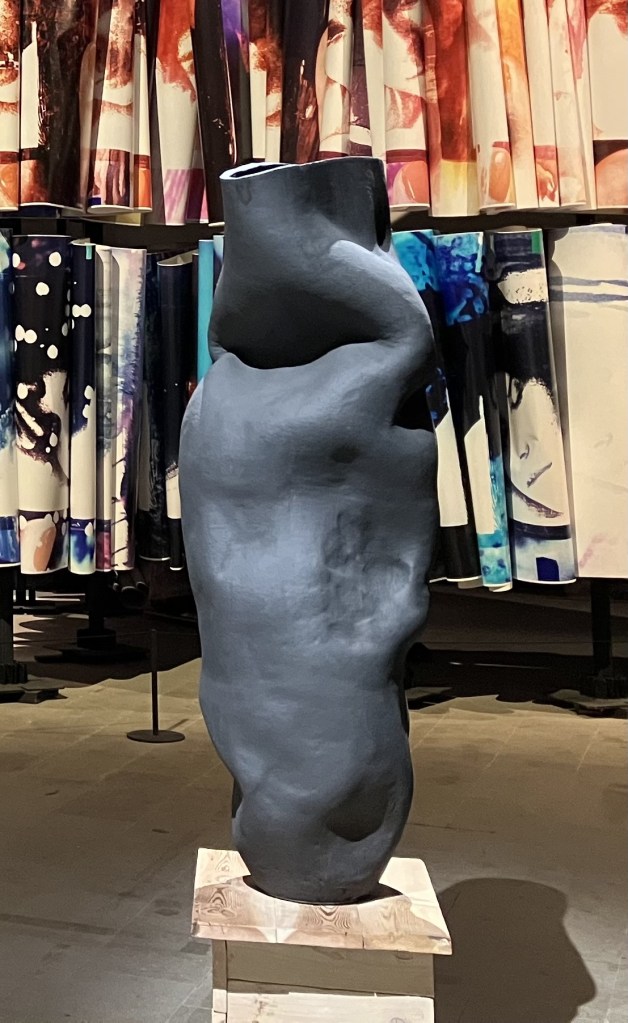
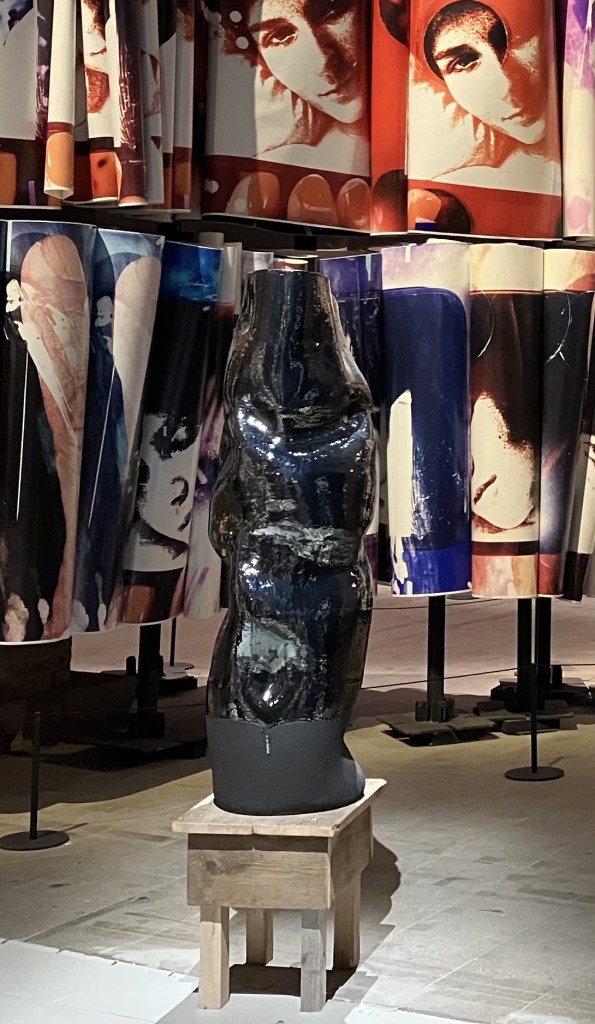
Ranti Bam, Nigeria
The word ‘imbibing’ seems to have come to me again and again over the last few days – so I guess it must be the best, or most instinctive, way to describe how I take-in the art. It is all-inclusive. It can be an assault on the senses sometimes – especially in the multi-artist exhibition. There is definitely a point when I reach maximum capacity and have to leave… like I might explode if I try to take in any more?!
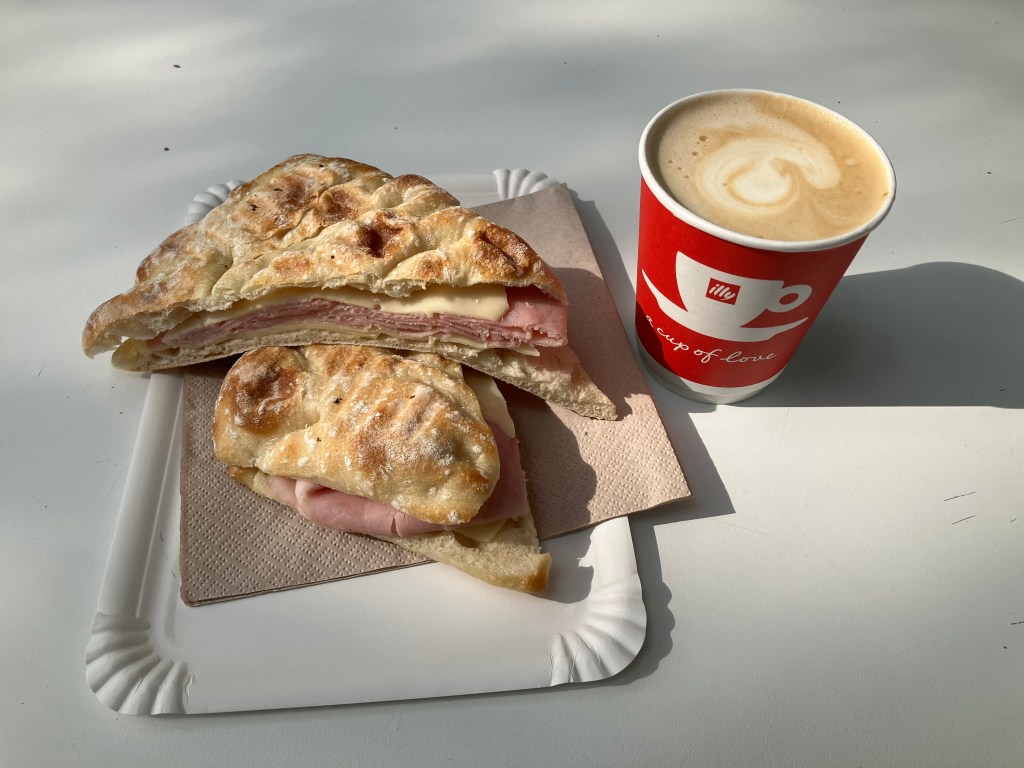
We stopped for lunch (this is where the people really got in the way!) and then headed back into the nearest gallery and, oh boy, what a treat!
This wasn’t the only time we entered a space from the bright outside (screw you, weather forecast, and your gloomy 85% chance of rain every day we were there – we saw one light shower!) and entered a space so dark that we could not see a single thing and had to wait a surprising amount of time for our eyes to adjust sufficiently.
The Indian Pavilion was exquisite. Without doubt the best thing we saw. It was made up of five works. Five artists. India’s first pavilion in seven years and such a winner.
The Exhibition is entitled Geographies of Distance and reflects on how home is transformed by distance and environments. The cities of India are developing so fast that you can live in the city you grew up in and still feel it is not the place you grew up in. So this was put together with two dimensions: one, what happens when you are physically in India but the environment around you has changed so much that it feels unfamiliar, and then also the diaspora – maintaining a sense of home when you are geographically far away.
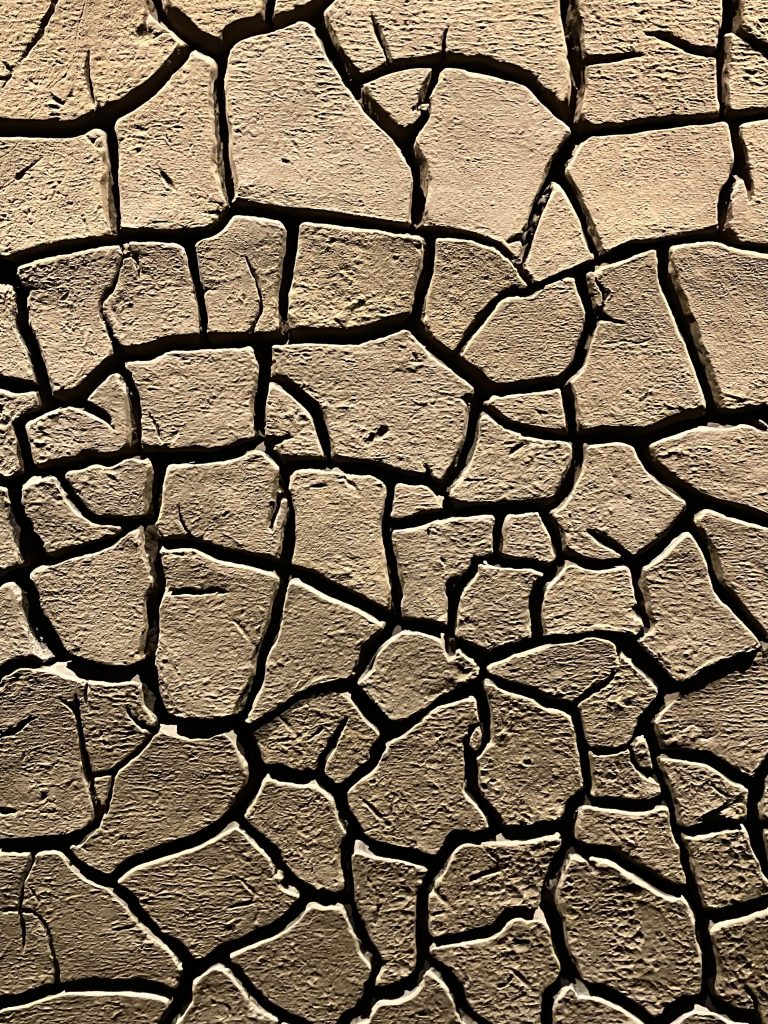
Once adjusted to the dim lighting, you are met with this beautifully simple work by Alwar Balasubramaniam.
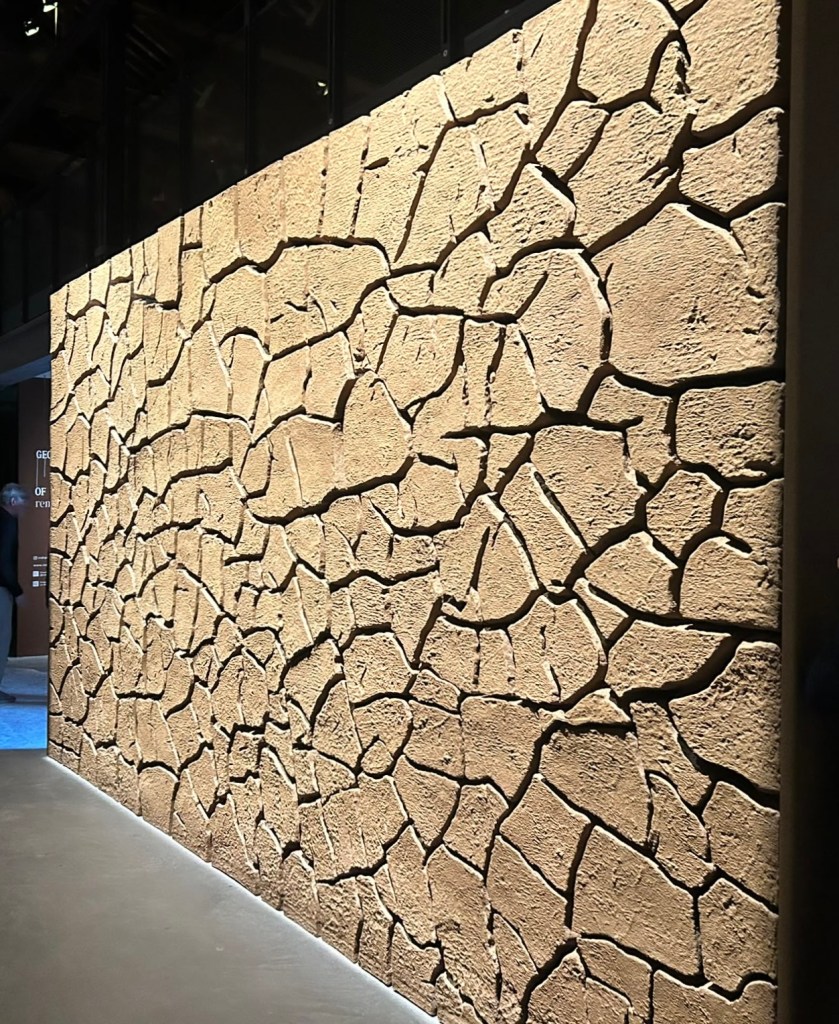
One of two panels made from earth (sourced from the artist’s rural Tamil Nadu home), resin and paddy grains, and shaped through a collaboration with nature that he carefully initiates and guides. It reminds us that the ground beneath us is enduring yet vulnerable.
Moving into the main space was breathtaking.
This was why I was in Venice, for exactly these moments.
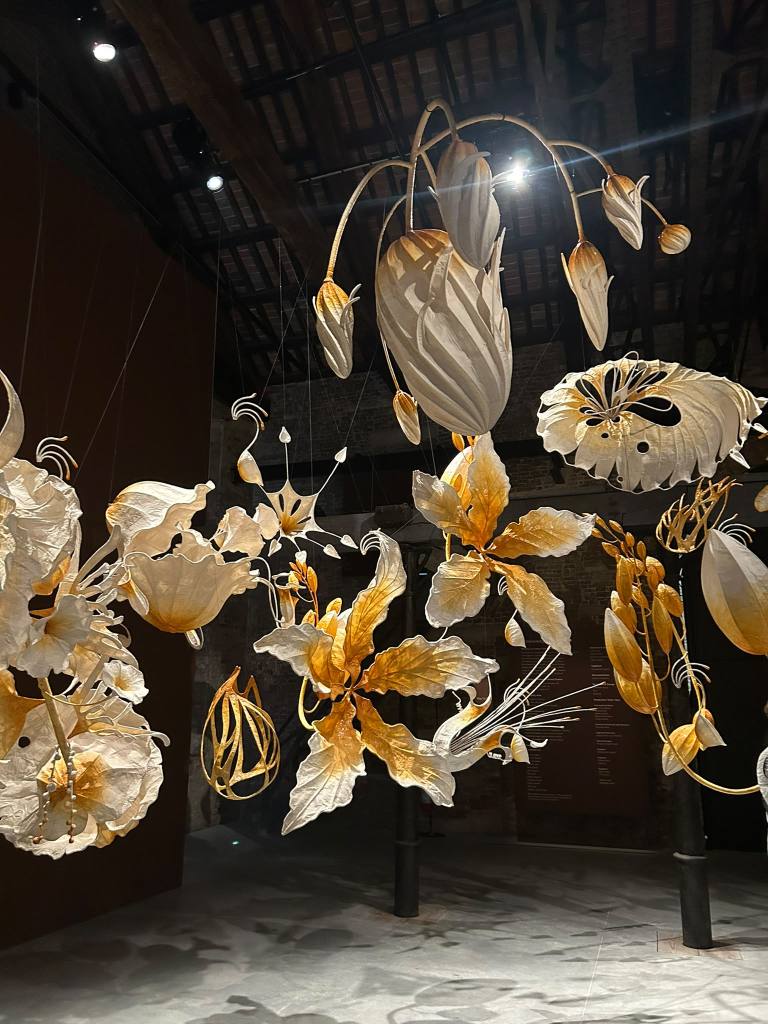
The work of three artists so sensitively becoming one in the space.
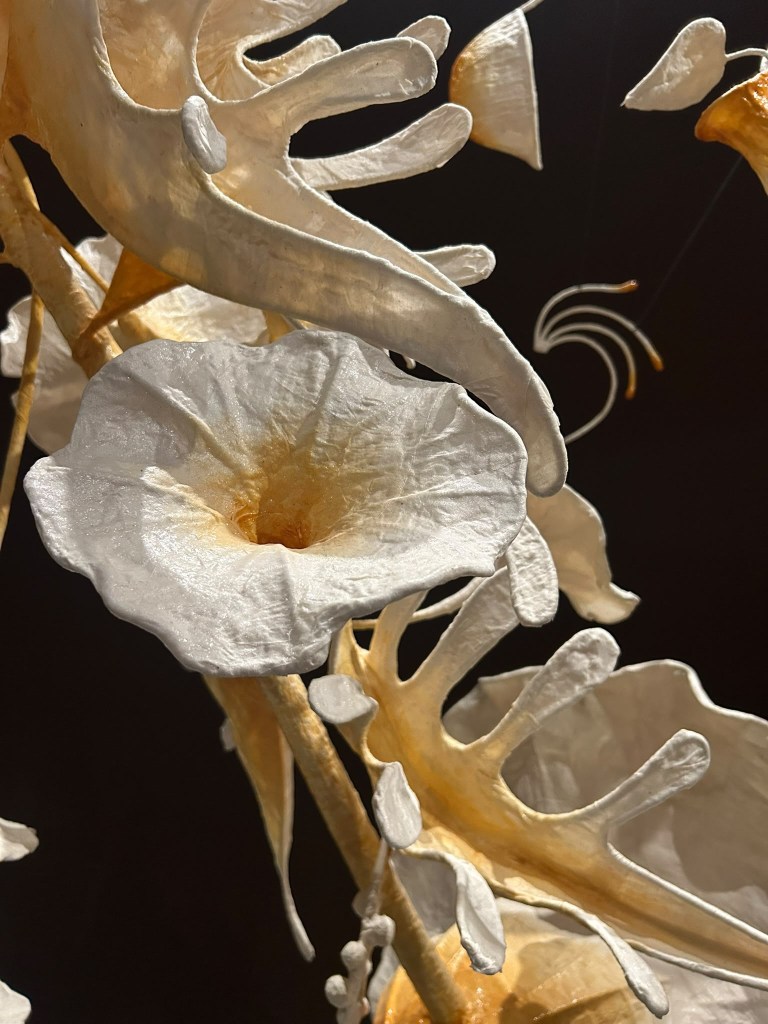
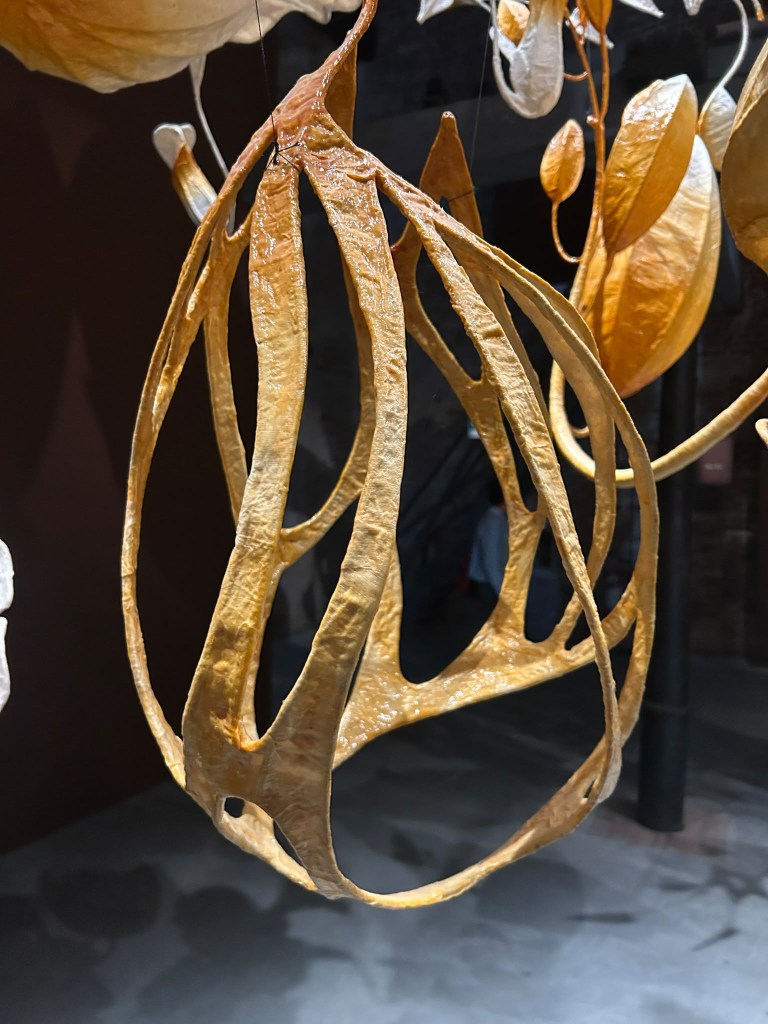
Ranjani Shetter’s Under the same sky is made from handwoven cotton fabric, steel and lacquer. ‘This suspended sculptural garden unfolds as a lyrical composition of form, material, and movement, where hand-crafted elements hover in delicate equilibrium… In this installation, home becomes a sensory and contemplative condition: a place of balance achieved through thoughtful composition.’ That’s all very well, but for me what was so special was the scale of things that are normally so very tiny with such fine detail, blown up so large, suspended and yet still portraying those intricacies, was all-encompassing. And there was something about the almost mono-colour of the pavilion as a whole, of course, these plants being the most notable straying from their ‘normal’ colours, which just lifted the room and the viewers’ experience to such heights.
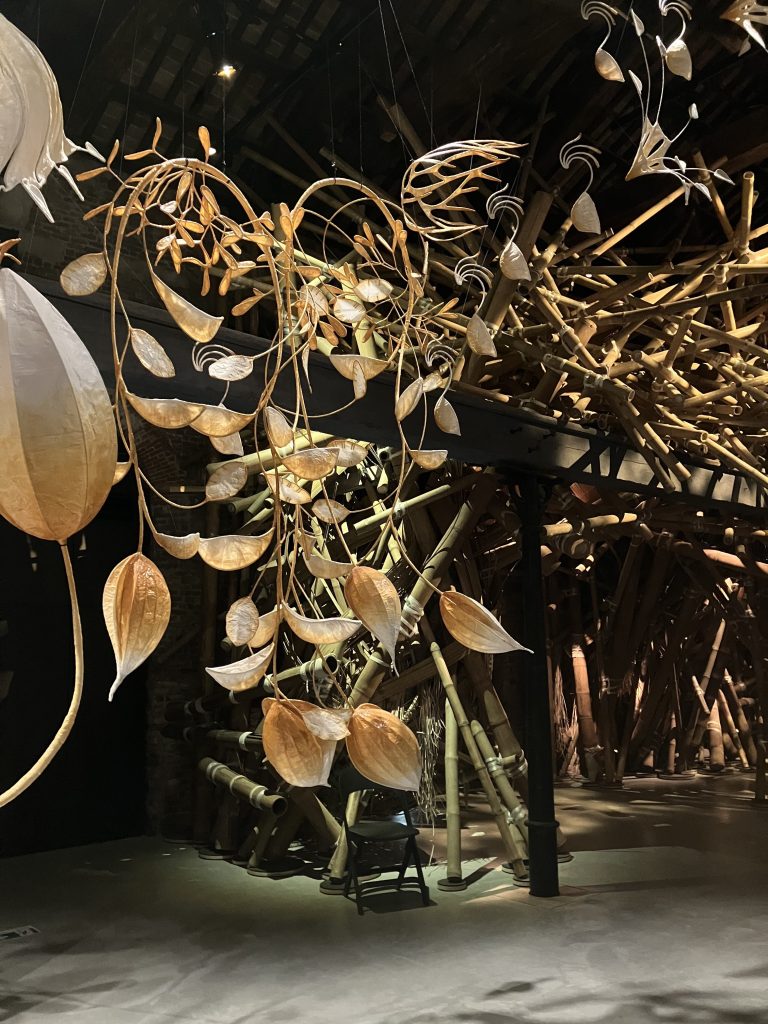
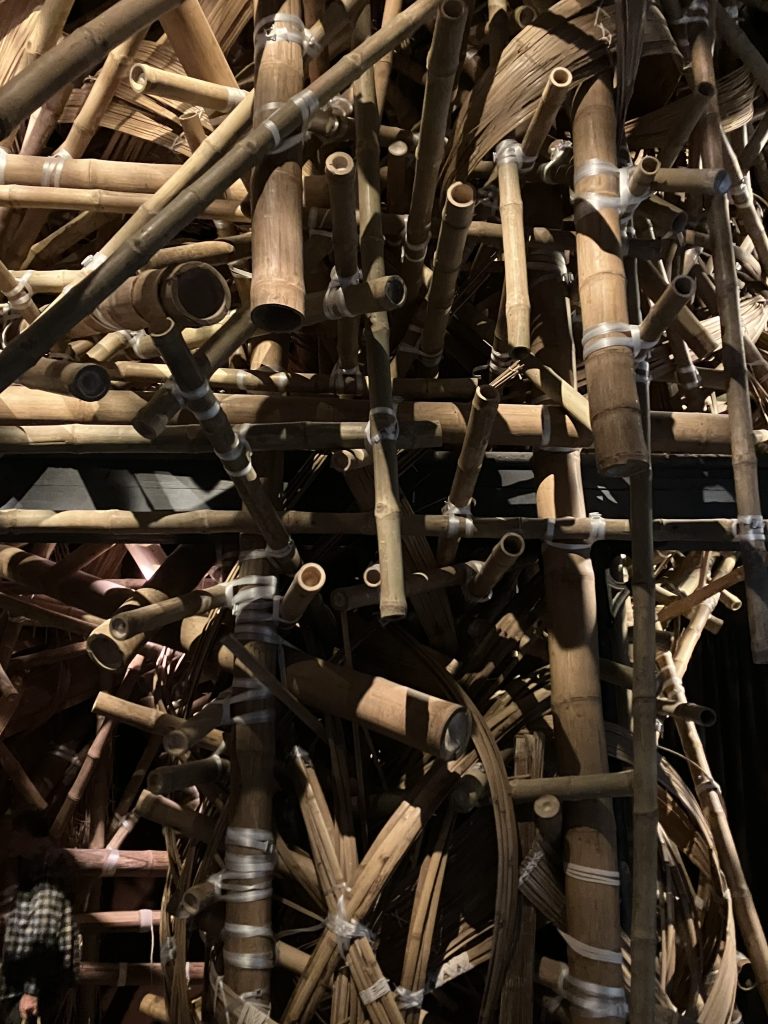
Hard to believe these two works are not from the same artist in the way they join up so seamlessly, but Asim Waqif’s Chaal’s bamboo scaffolding reflects the ubiquitous construction sites of Indian cities. Overwhelming in scale, this work invites us to reflect on how, all around us, new buildings supersede old ones. This work reminds us how home can be in a perpetual state of becoming – provisional and under construction.
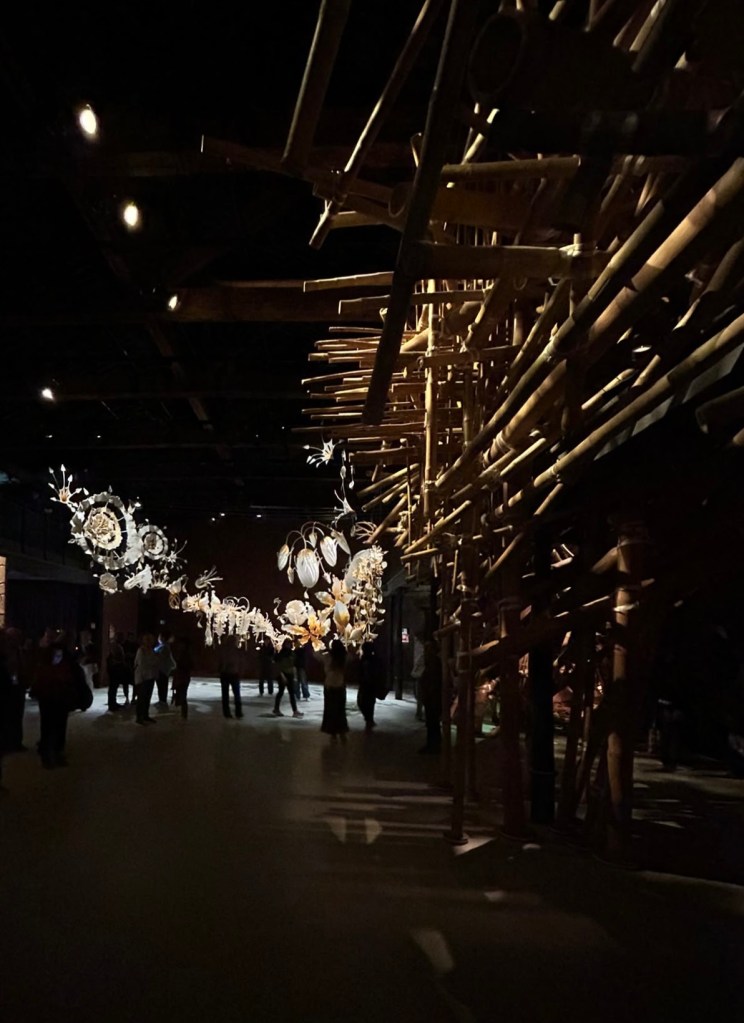
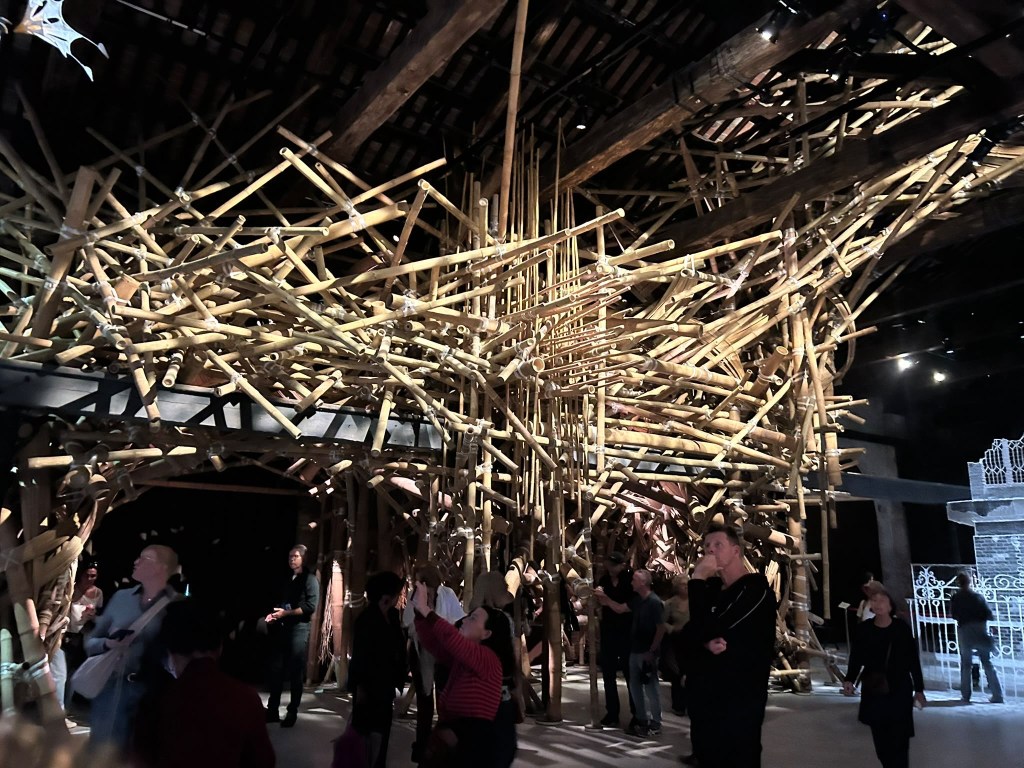
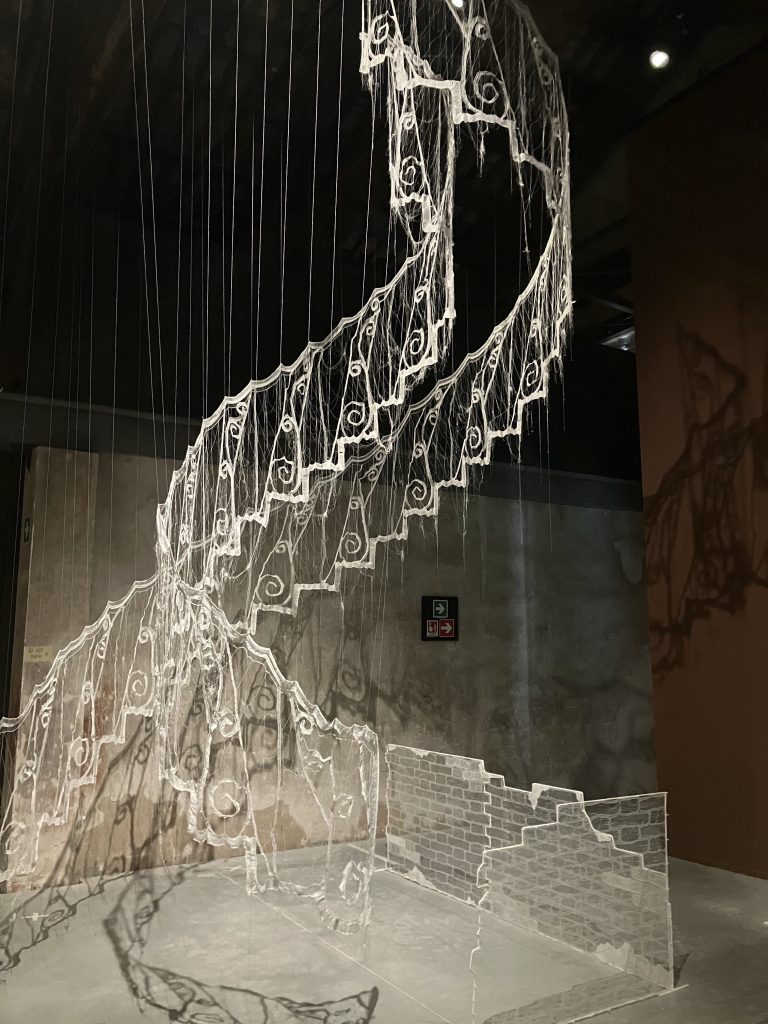
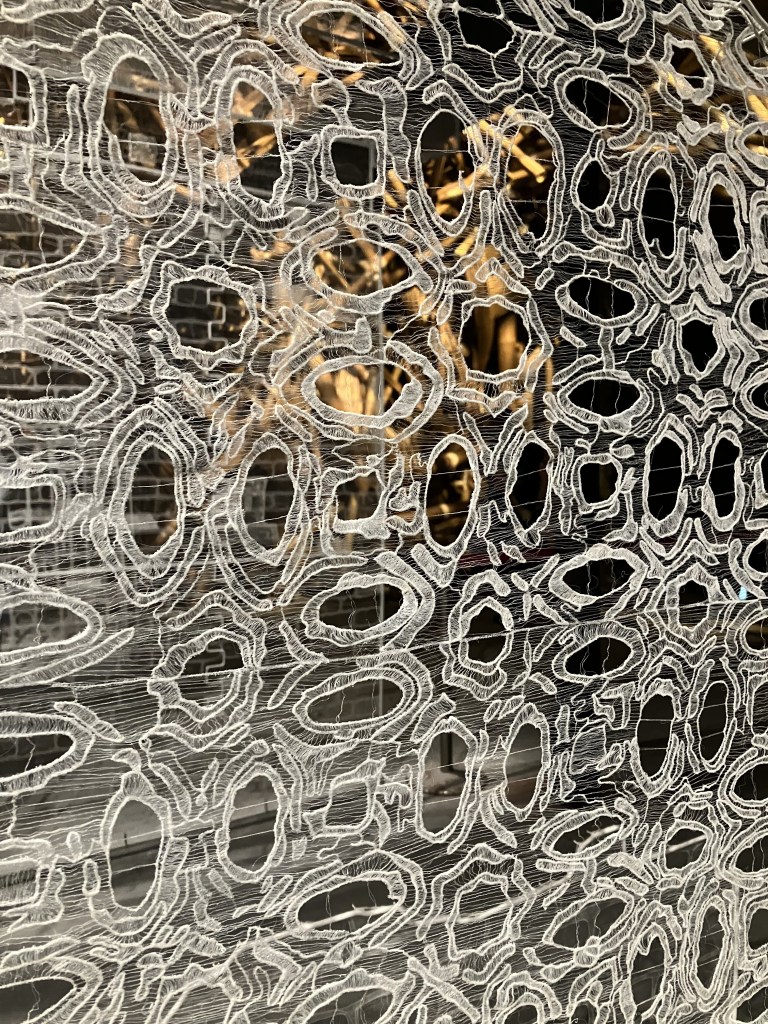
And, as mentioned, the bamboo scaffolding emerges into the lace house of Sumakshi Singh’s Permanent Address.
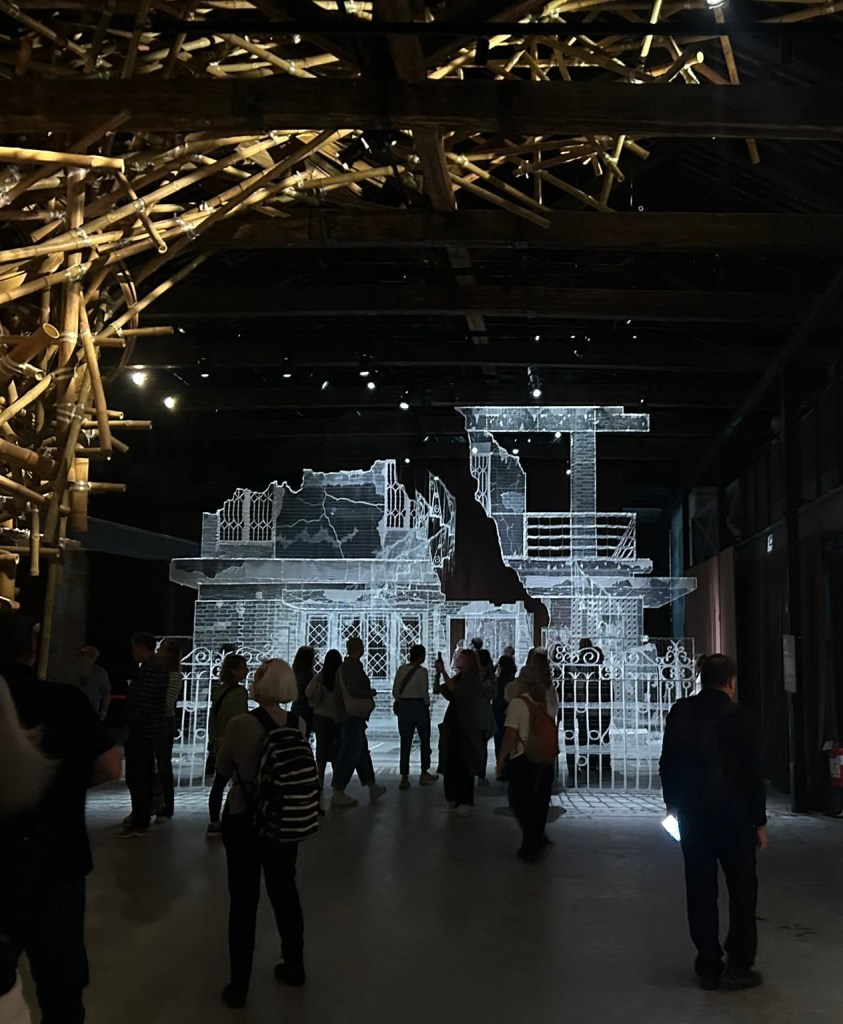
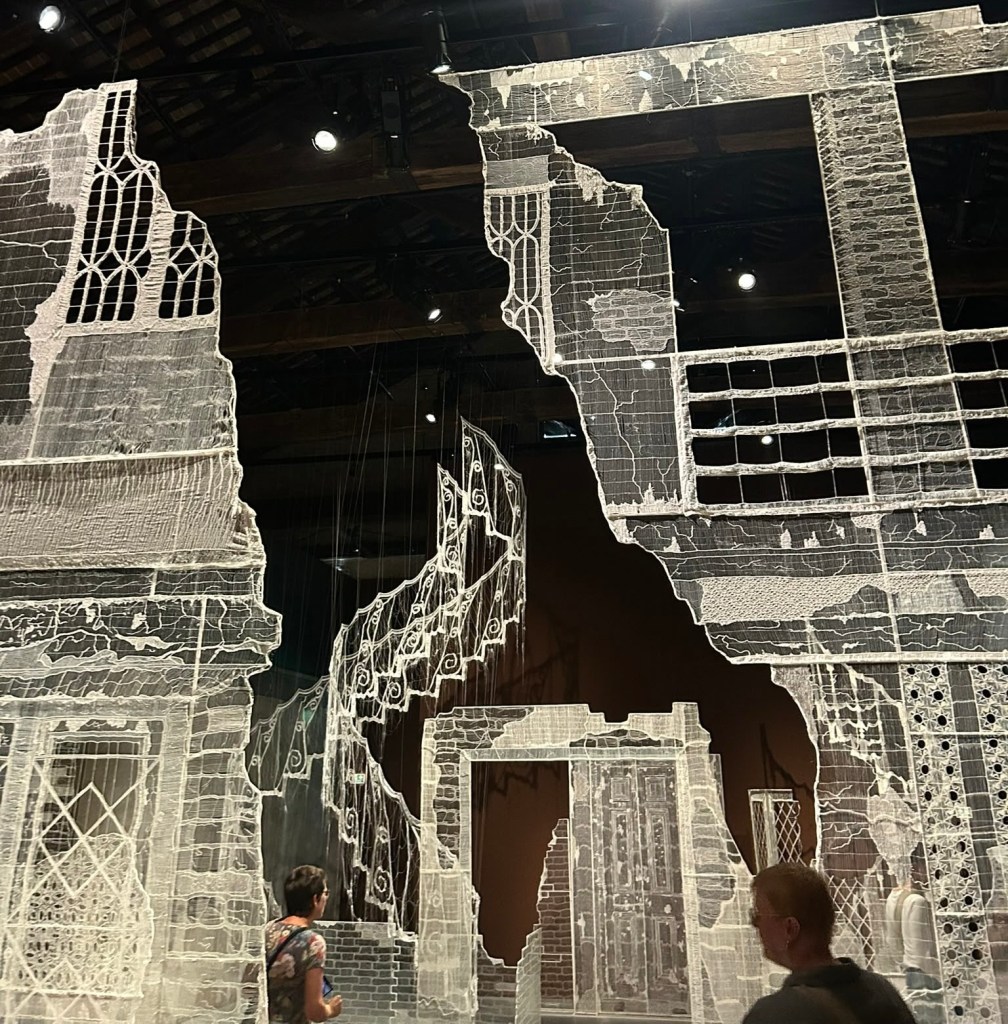
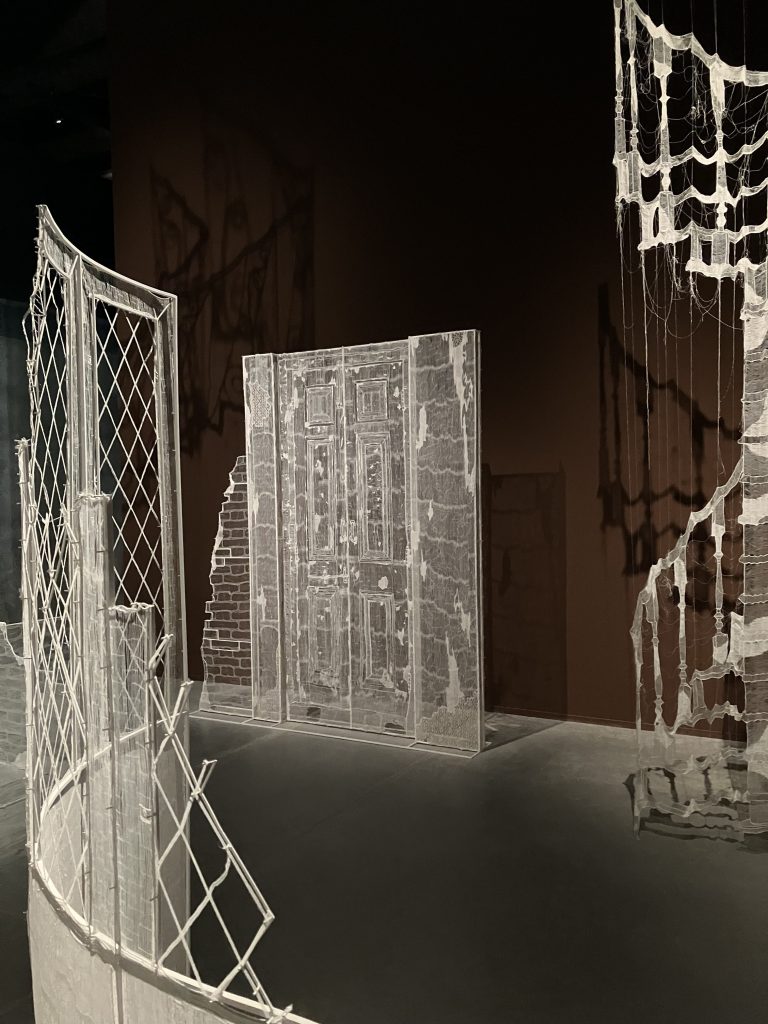
The installation recreates, in embroidered silk, cotton and nylon thread on steel frames, the family house of her Grandparents where she spent many formative moments of her childhood. She moved a lot as a child, so this house in Delhi was where she returned to. Her emotional anchor – I love this especially as I know my son feels the same of my parent’s house. When her grandparents died, it was demolished and the land sold. The artist was heartbroken so she measured the house and rebuilt it in thread (pretty sure my son won’t be doing this!). It represents something that no longer exists physically but continues to exist emotionally. This work encourages the viewer to reflect on loss and what home means when its physical form has vanished entirely.
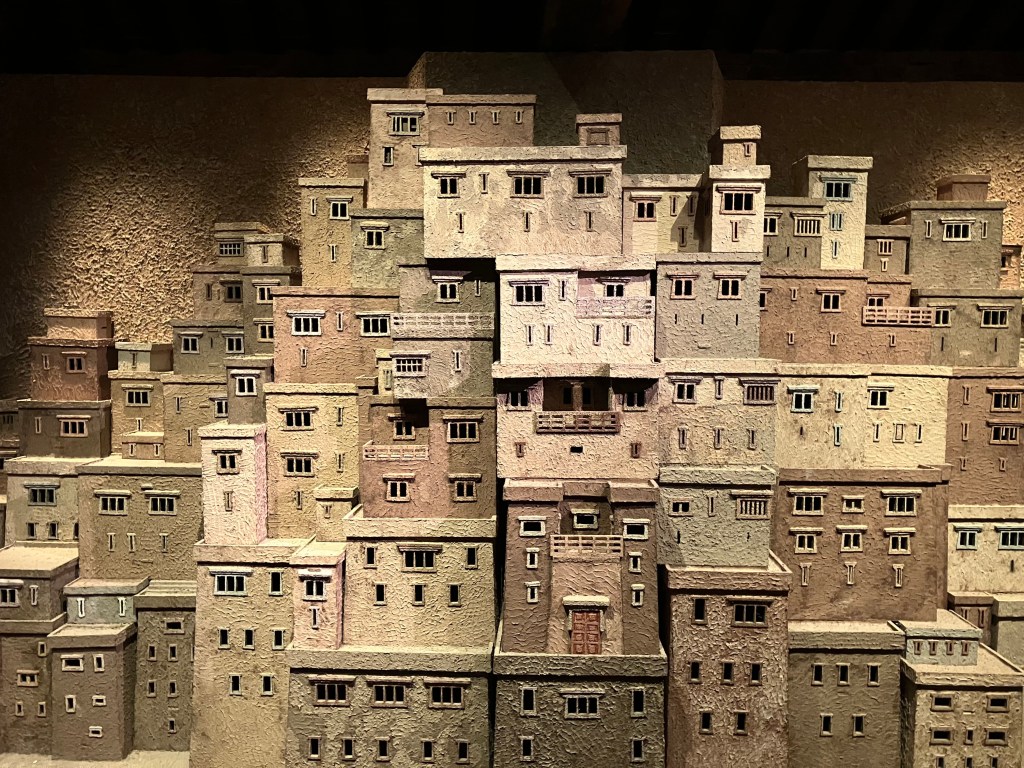
The fifth artist in the Pavilion, Skarma Sonam Tashi’s work, is on a mezzanine level, giving you another perspective to view the former works.
Native to Ladakhi, Echoes of Home is a structure made from recycled cardboard, papier-mâché, and clay pigmented with natural binders that mirrors the vulnerability of the traditional Ladakhi ways of life under pressure from urban immigration and modern construction.
And breathe…
I think in any gallery or exhibition I am ultimately looking for that one hit of adrenaline, of the rush of exquisite beauty and peace that can be found in visual art. And once found, it’s almost ‘job done’. I mean, I reflect that that is how I felt at this stage in the day, but we’d seen a lot by this point, and we were both dead on our feet!
Would’ve been rude to give up, though. So we ate gelato (a theme of the trip) and wandered the streets and canals to one more venue.
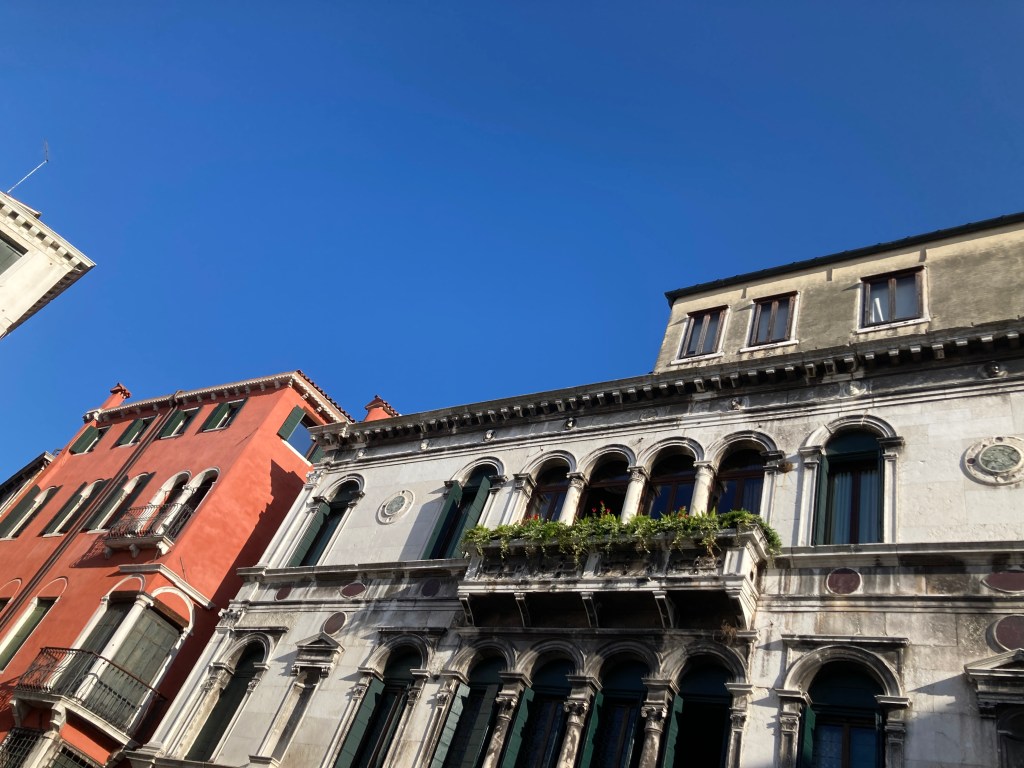
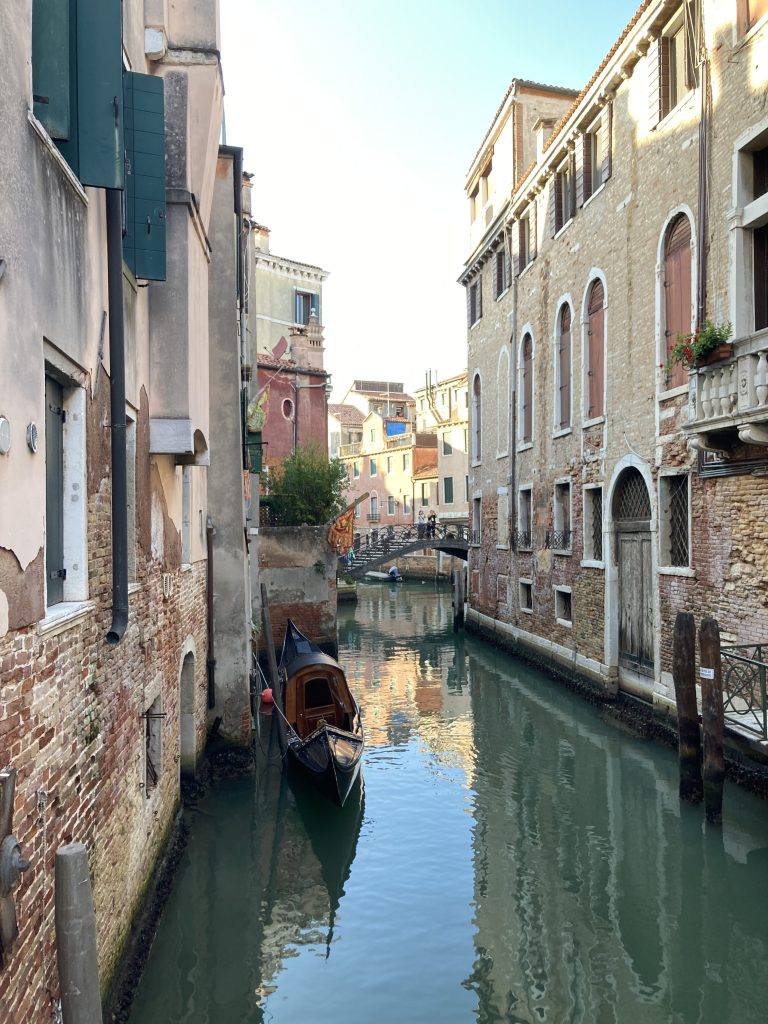
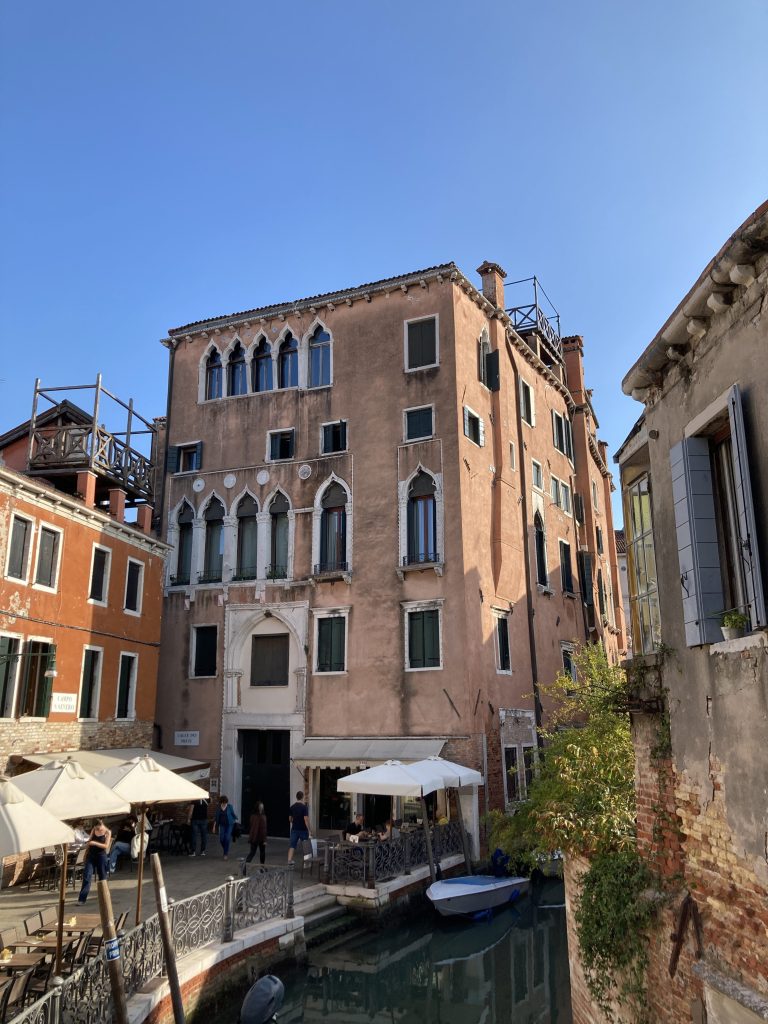
I am really interested in the way art is juxtaposed in buildings, and also fascinated by what is behind the facade of all the amazing buildings of Venice. So the installations and Pavilions located around the city, and not in the main venues, are of great intrigue to me.
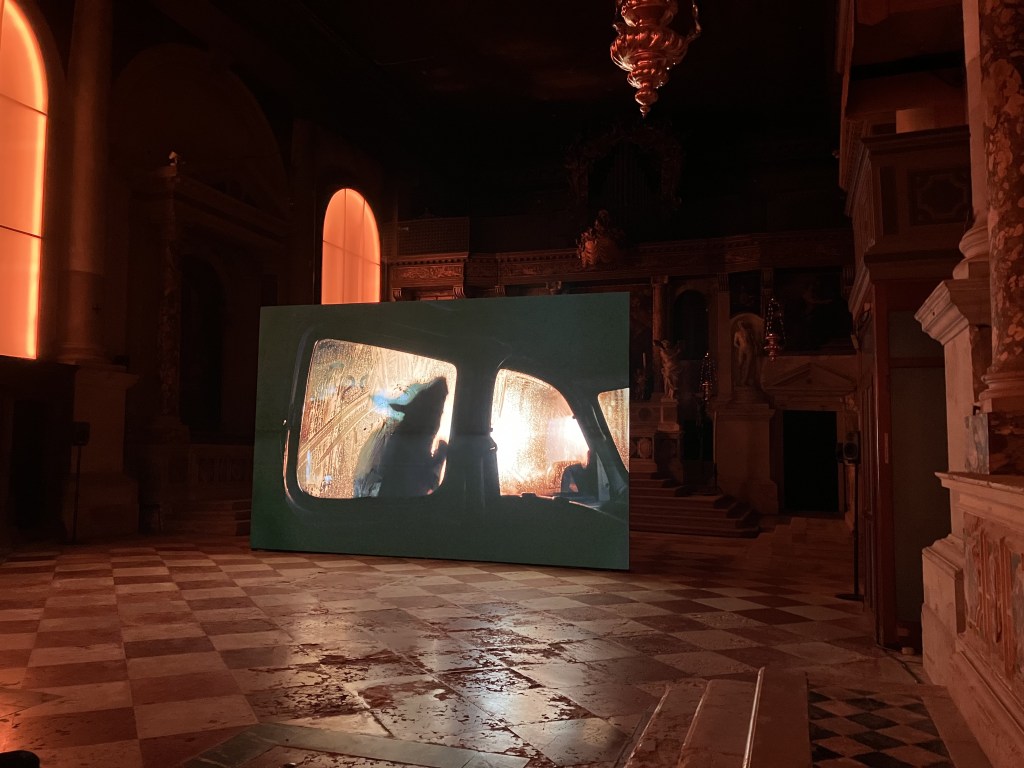
The Complesso dell’Ospedaletto did not disappoint. Fondazione In Between Art Film was an installation of 8 films from artists around the world. It’s pretty hard to describe a film – and definitely not necessarily that entertaining.
But I can tell you the following:
Watching a film (by Janis Rafa, Greece) about the exploitation of both human and non-human bodies (animals), offering a meditation on the tension between life, death, survival and sacrifice, set in a meat refrigeration facility, on a screen in front of the altar of a chapel, is quite an experience!
And also:
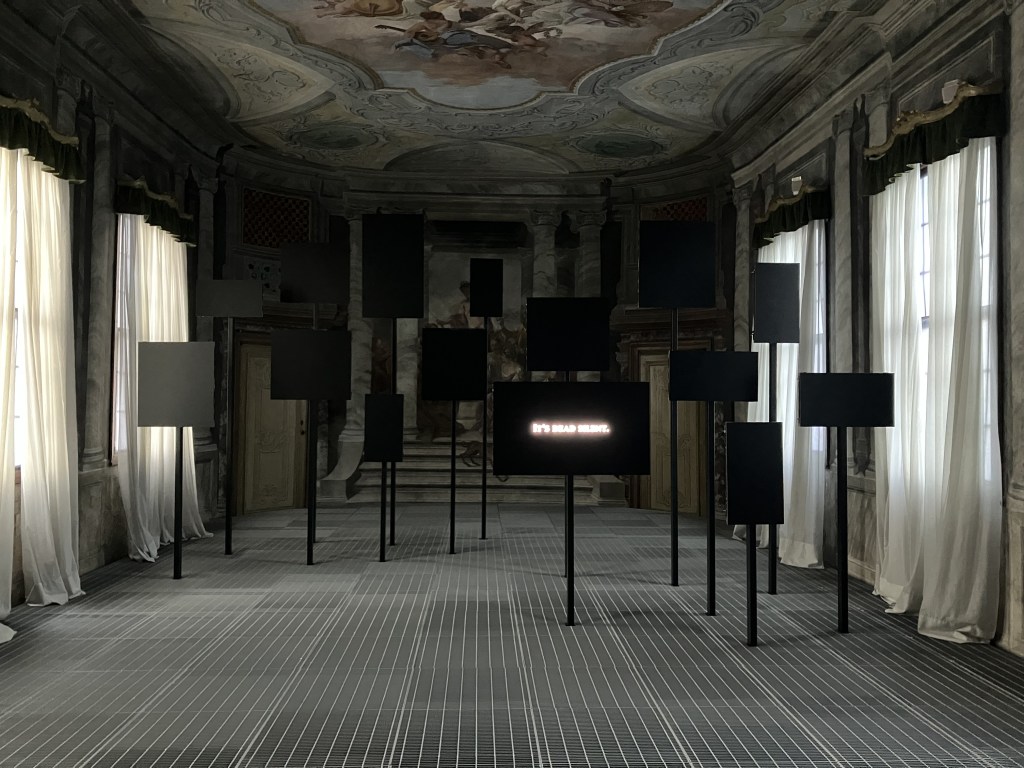
I learnt, from a multiscreen film (by Lawrence Abu Hamdan, Jordan) in a former ‘concert room’, about a silent vigil in Belgrade on March 15th 2025. Silent vigils have become an effective mode of resistance against the government in Serbia’s recent student movement. These vigils are 15 minutes long, and this one was almost at its end when video recordings show the crowd (300,000 people) suddenly dispersing, as if fleeing from some invisible yet terrifying force. The following day, Earshot – the audio research agency founded and directed by the artist – was inundated with requests from the victims to investigate. The sound, denied by Serbian and Russian authorities, undetectable by microphones, yet described with striking consistency across more than 3000 written statements, is thought to be the first documented use of a sonic weapon known as LRAD 450XL.
We needed silence and soul food.
More to follow…
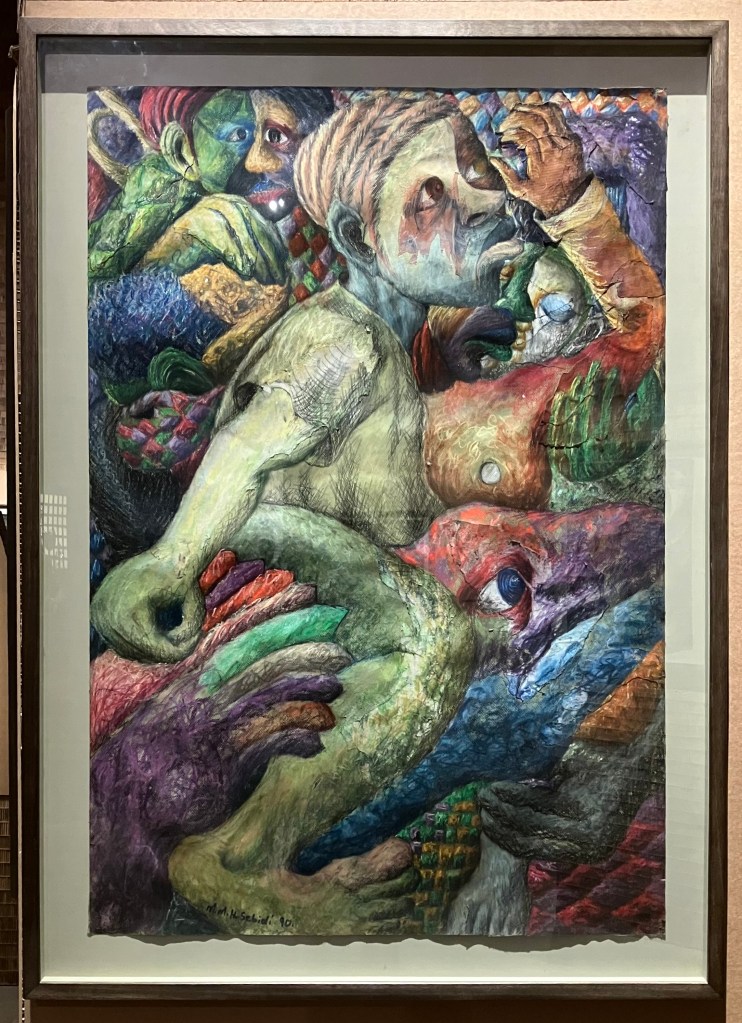
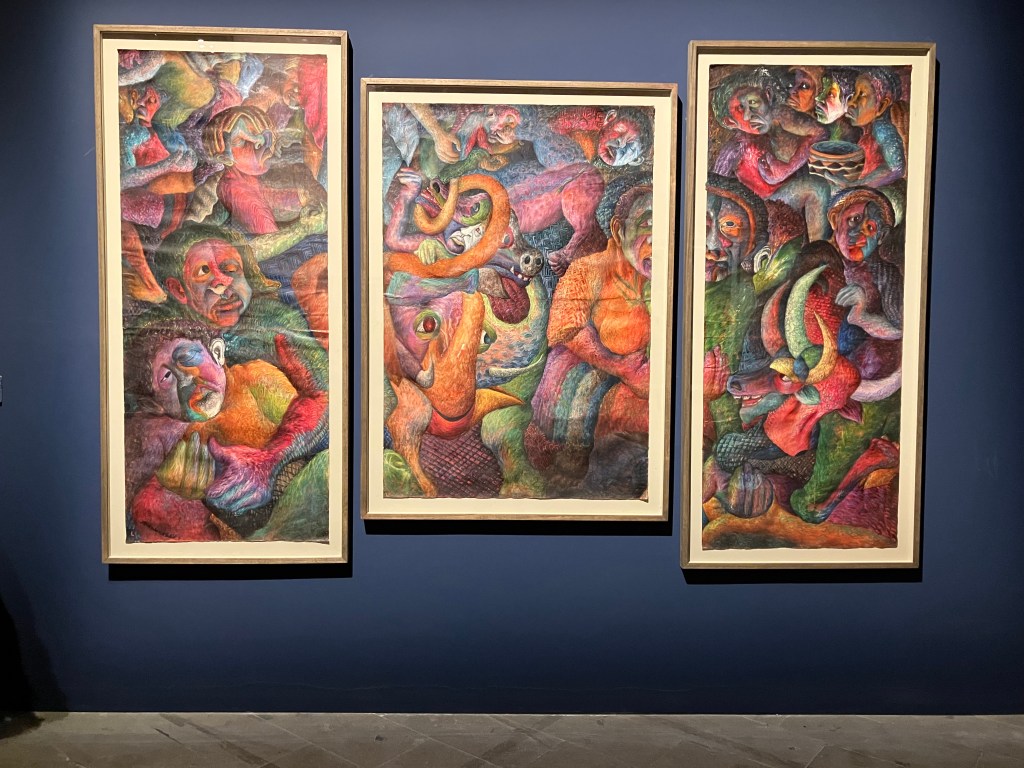
But for now, a few more highlights:
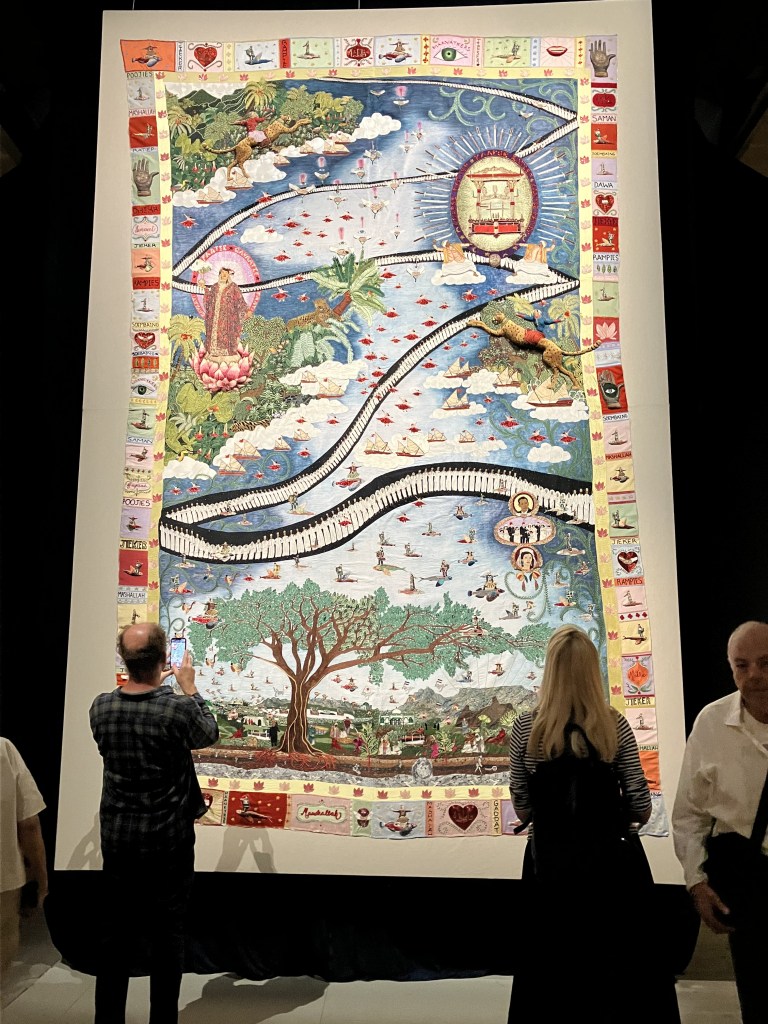
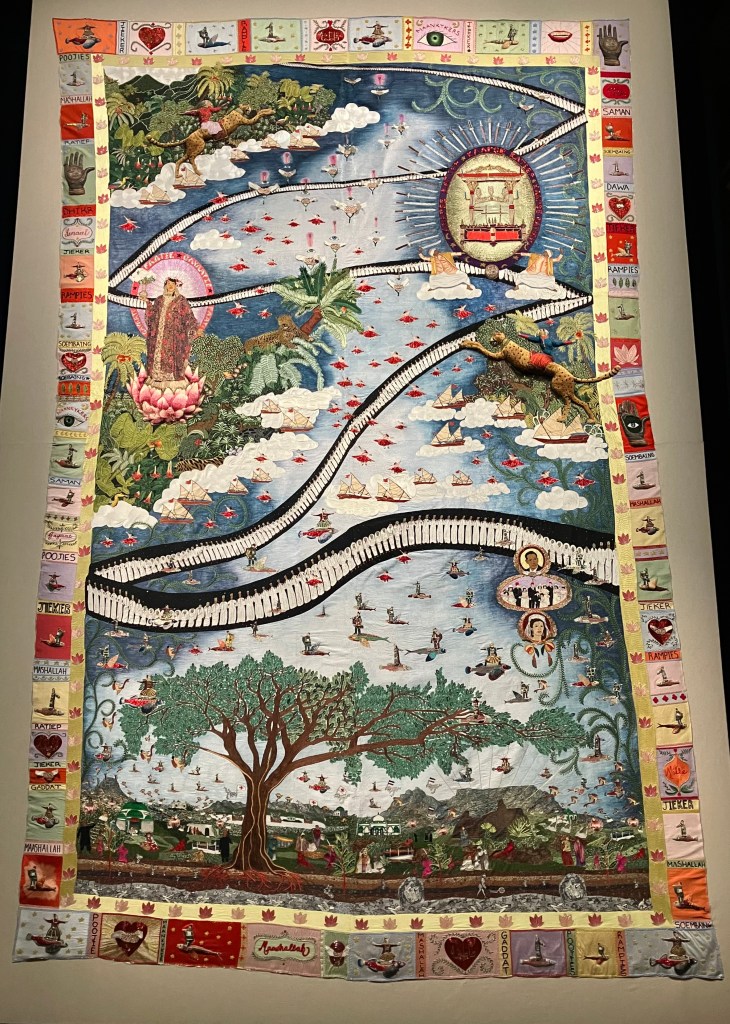
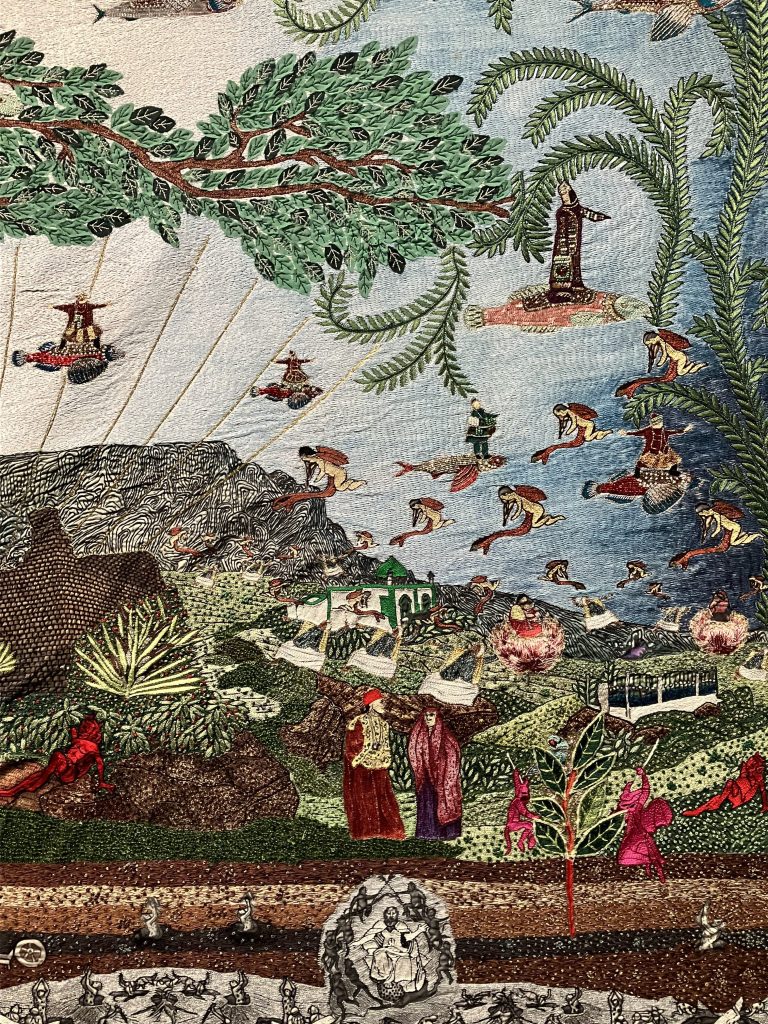
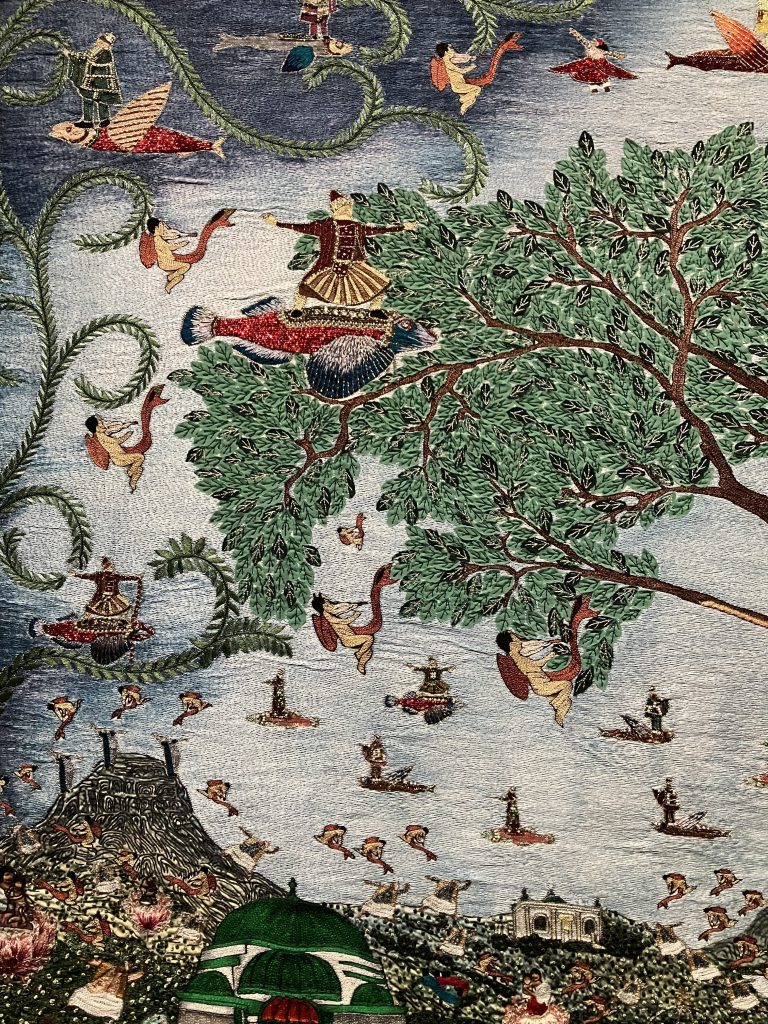
Thania Petersen, South Africa – Cosmological offerings for a drowning world. Hand embroidery.
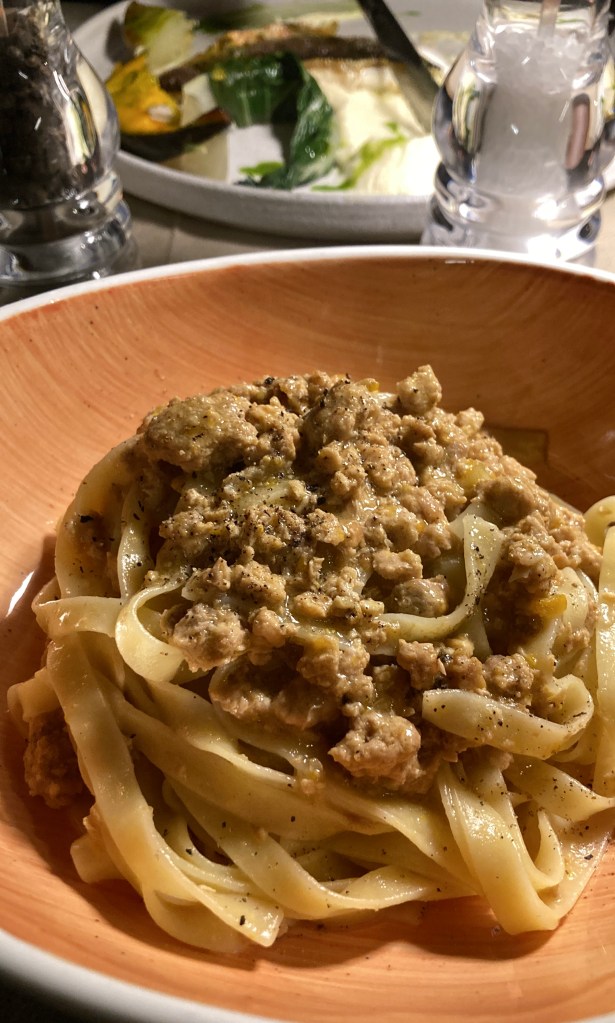
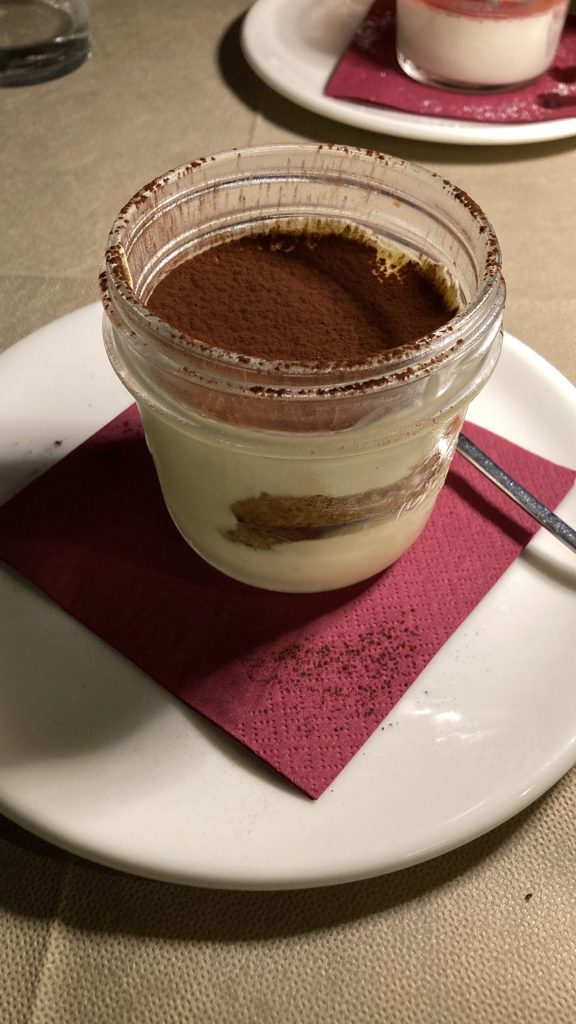
Yum!


Leave a Reply